Software that moves with your freight business.

Logistics businesses run on precision — late pickups, non-compliant drivers, and disconnected field teams don't stay problems for long before they become costs.

EB Pearls builds the operational software that freight and supply chain businesses need to scale without the chaos. 
  • 900+ platforms built
  • 20+ years delivering
  • #1 Clutch - 4 years running
Industry_Logistics
lightning
70%
Manual work cut — CT Freight
files
95%+
Compliance rate, auto-generated
user-circle-plus
0
Extra hires to absorb growth
seal-check
ISO 27001
Security Certified
seal-check
ISO 9001
Quality Certified

Logistics & supply chain businesses are facing the same operational pressures.

truck

Freight & transport operators

Businesses running fleets of vehicles who need better visibility over driver location and compliance without relying on phone calls and spreadsheets to know what's happening in the field.
warehouse

3PL and warehousing businesses

Third-party logistics providers managing complex fulfilment and carrier relationships who need software that maps to how their operation actually works not just a WMS that fits.
globe-hemisphere-east

Global freight forwarders

International freight businesses coordinating shipments across carriers, customs, and ports who need tools that connect operational data and give customers visibility without the overhead.
steering-wheel

Fleet-heavy supply chain businesses

Companies with transport assets who need fleet management, maintenance tracking, driver compliance, and route optimisation all connected into a single operational picture rather than disconnected tools.

What logistics leaders actually worry about when digitising their operations

Logistics is an industry where software either earns its place in the daily workflow or gets abandoned the first time a driver can't figure it out on a loading dock. These concerns come up in every first conversation.
device-mobile-camera (1)

"Our drivers aren't tech-savvy. They won't use a complicated app."

Field logistics apps must work in trucks, docks, and deliveries; complex UIs fail, causing adoption issues no training can fix.

We design field apps for drivers, with minimal taps, offline use, and workflows matching real driver tasks, not office assumptions.
map-trifold

"We're managing routes manually. We know it's inefficient but don't know where to start."

Manual logistics planning wastes fuel, reduces driver capacity, and extends delivery times, leaving significant daily margins unrealised across every route.
Route optimisation adapts to delivery windows, vehicle limits, driver hours, priorities integrated seamlessly to your operational workflow.
notepad

"Driver compliance and fatigue management is a legal obligation. Right now it's paper-based."

In Australia, heavy vehicle compliance is mandatory; Chain of Responsibility laws make fatigue management legally risky and operationally fragile.
We’ve built driver compliance tools that capture fatigue, work diaries, and events, ensuring auditable records eliminating paper.
plug-1

"We're using five different systems that don't talk to each other. Our team is re-entering data constantly."

Logistics businesses use multiple unconnected systems, creating errors and outdated data; often, the solution is integrating existing tools, not replacing them.
Integration mapping in Discovery identifies necessary connections, standalone systems, and where a custom integration adds value before coding begins.
eye

"Our customers keep asking where their freight is. We don't have a good answer."

Customer visibility in logistics is expected, not optional; real-time shipment tracking enhances service, reduces inbound calls, and frees dispatch teams to operate efficiently.
wrench

"Fleet maintenance is reactive. We find out about a problem when a truck breaks down."

Reactive fleet maintenance costs more than planned upkeep, causing downtime, emergency repairs, missed deliveries, and administrative burdens, turning breakdowns into service failures.
Our fleet platforms manage maintenance, driver fault reports, and service history, ensuring workshops operate proactively rather than reactively.

Logistics software fails for specific reasons.

Most logistics software fails not because of the technology but because it was designed by people who've never watched a driver try to use an app at 5am on a loading dock, never dealt with a fatigue breach inquiry, and nobody in the business can tell them where it is.

Domain knowledge isn't optional in logistics it's the difference between software that gets used and software that gets circumvented. We've built across this vertical field workforce apps, fleet management, compliance tooling, and customer visibility platforms. That operational understanding shapes every architecture decision from Discovery.

device-mobile-camera (1)

Field-first design, not desktop-first

Every field app we build is designed for the operational context — low connectivity, one hand occupied, gloves on, time pressure. Desktop-first thinking produces field apps that get abandoned by the second week.
scales

We understand logistics compliance

Chain of Responsibility, fatigue management, heavy vehicle standards, dangerous goods requirements compliance obligations shape how we architect driver and fleet systems from the start, not as an afterthought.
arrows-clockwise-1

Integration-first approach

Logistics businesses have existing TMS, ERP, and accounting systems. We map what needs to connect and what doesn't before quoting so the new platform enhances what's there rather than demanding a rip-and-replace.
icons8-user-groups-1-1

Named leads who stay on the project

Engineering Manager, Business Analyst, and Account Manager assigned from Discovery and staying throughout. Your team deals with people who understand your operation, not whoever's available this sprint.

Logistics businesses that trusted us to build it right.

Freight operations, global logistics, and fleet management — three different problems in the same industry, solved with the same discipline of building software that works in the field.
ct_freight_logo

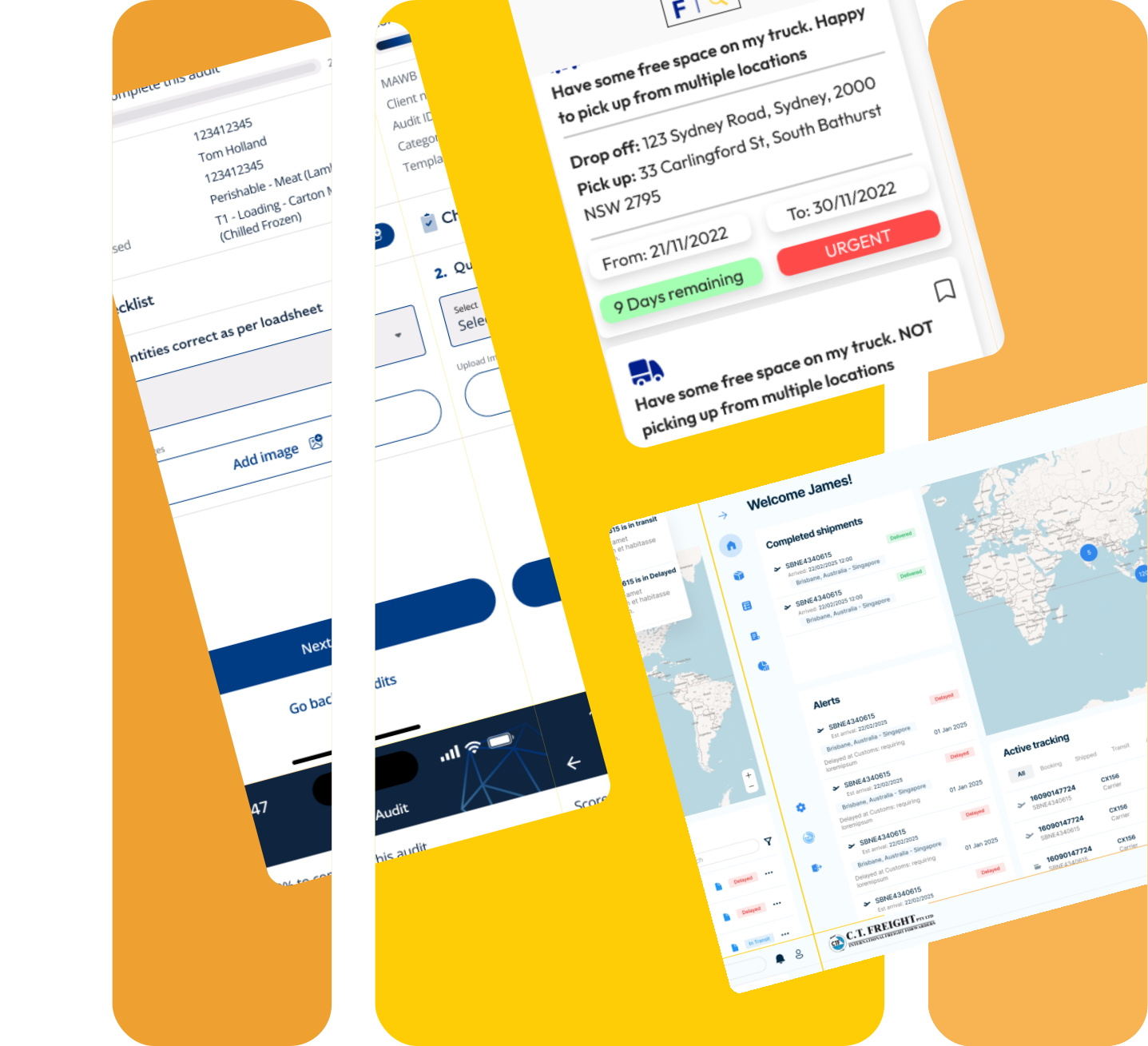
CT Freight: 70% reduction in manual work · 0 extra hires to absorb 12 months of growth

CT Freight moves temperature-controlled freight across Australia under tight export windows, multiple warehouse sites, strict compliance obligations, and a team where every shipment has to be right. By 2023, growth was outpacing the systems underneath it. Status updates lived in WhatsApp threads and shared folders.

Explore CT Freight Story
CT freight (1)
mondiale

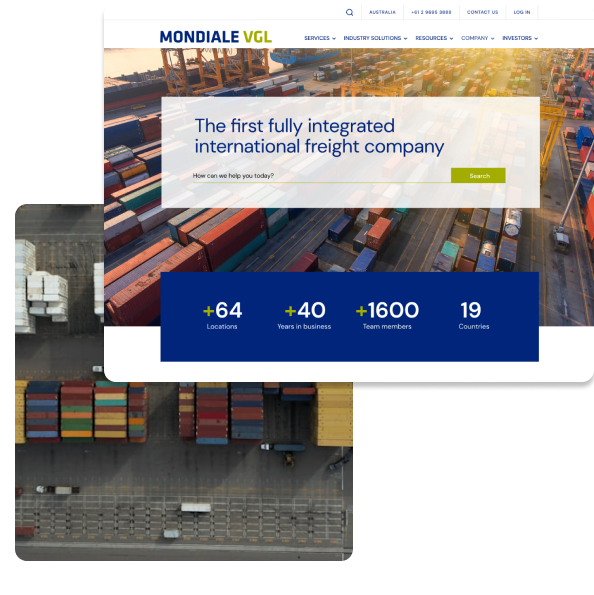
Mondiale VGL: International freight platform · Customer shipment visibility

Mondiale VGL coordinates international freight across carriers, customs clearance, a chain of operational complexity that's invisible to customers who just want to know where their shipment is. The gap between what customers expect in terms of visibility and what a traditional freight can provide manually is the problem that software solves.

Explore Mondiale VGL Story
Mondiale

The platforms logistics businesses actually need built.

Logistics has a large market of off-the-shelf software — and most of it works well enough for the average freight business. The businesses that find their way to a custom build are the ones whose operations have specific constraints, integration requirements, or compliance obligations that generic software can't accommodate without significant workarounds.

We're not the right choice if a standard TMS would do the job. We are the right choice when the gap between what's available off-the-shelf and what your operation actually needs is costing you more than a custom build would.

01

Field Workforce Apps

Driver apps for job allocation, proof of delivery, compliance capture, and communication — designed for the operational realities of field work, including low connectivity and one-handed use.
02

Route Optimisation Platforms

Route planning that accounts for your specific constraints — delivery windows, vehicle capacity, driver hours, customer priority, and real-time conditions — not generic algorithms applied to your data.
03

Fleet Management Systems

Vehicle tracking, maintenance scheduling, fault reporting, service history, and asset management — connected into a single platform that gives your operations team a live picture of fleet status.
04

Driver Compliance Tools

Fatigue management, work diary capture, Chain of Responsibility compliance, and audit-ready records — built to meet legal obligations without manual overhead.
05

Customer Visibility Portals

Shipment tracking, automated ETAs, delivery confirmation, and exception alerts — giving customers the visibility they expect without requiring your operations team to answer status calls.
06

Operations & Dispatch Platforms

Job management, carrier allocation, load planning, and operational dashboards — connected to field apps and fleet data so your dispatch team has a live view rather than a phone-dependent one.

Where AI creates real value in logistics and supply chain

AI in logistics isn't about replacing operational judgement — it's about removing the manual processing that slows it down. Demand forecasting, anomaly detection, document automation, and predictive maintenance are where AI earns its cost in a freight operation.

package-1

AI Demand Forecasting

Predicting freight volume patterns across routes, customers, and seasons — so capacity planning is based on data rather than the operations manager's intuition about what's coming next week.

magnifying-glass-1

Anomaly Detection & Alerts

Automatically flagging exceptions — vehicles deviating from route, jobs running significantly over time, compliance thresholds approaching — before they become incidents that require a response.

icons8-edit-file-1

Document & POD Processing

Automated extraction from proof of delivery documents, freight invoices, and customs paperwork — reducing the manual data entry that consumes back-office time in freight forwarding and 3PL operations.

wrench

Predictive Fleet Maintenance

Using vehicle usage patterns and fault history to predict maintenance requirements before a breakdown — keeping fleet availability high and emergency repair costs low.

Our system for building agricultural platforms
that work where farming happens

Agricultural software fails in three predictable ways: it doesn't work offline, it doesn't fit the domain, or it's too complex for users under operational pressure. Built to Last™ is how we prevent all three. See the full Built to Last™ framework →

01

Field Ready

  • Offline-first architecture — works without signal, syncs when it returns
  • Glove-friendly interfaces designed for physical work environments
  • High-contrast displays readable in direct sunlight
  • Minimal-tap workflows for time-pressed agricultural users
  • Low-bandwidth data transfer for rural connectivity conditions
  • GPS and location features designed for large rural properties
02

Domain Ready

  • Agricultural data structures built around real industry workflows
  • NLIS and livestock identification integration designed correctly
  • Commodity price feeds and weather data connected properly
  • Seasonal operational patterns reflected in architecture
  • Industry terminology used correctly — not approximated
  • Regulatory requirements for agricultural data handled from Discovery
03

Scale Ready

  • Seasonal peak load architecture — not average-day sizing
  • Multi-property and multi-entity data structures for large operations
  • Performance maintained across large rural datasets
  • Global deployment capability for AgriTech products with international reach
  • Monitoring that understands agricultural usage patterns
  • Post-launch support around the agricultural calendar, not 9–5

A process built for
logistics complexity

Logistics projects have compliance obligations, integration complexity with existing TMS and ERP systems, and field operational realities that need to be mapped before building anything. Our process front-loads that work so the build doesn't surface surprises.
01

Discovery

We map your compliance obligations (CoR, fatigue management, dangerous goods), existing systems, field workflows, and integration landscape before quoting. Fixed price. Documents yours regardless of what comes next.
Field workflow mapping and compliance audit at this stage, not mid-build.
02

Design & Architecture

UX designed for drivers and field teams — under the conditions they actually work in. Integration architecture designed around your existing systems. Offline capability specified from the start for poor-connectivity routes.
Field UX validated against real driver workflows. Integration spec confirmed before build.
03

Build & Testing

Two-week sprints with full Jira visibility. Field testing in real operational conditions — loading docks, truck cabs, depot environments — before go-live. ISO 27001 process throughout.
Field-tested before launch. Compliance requirements verified before delivery.
04

Deploy & Evolve

Regulation changes. Fleet grows. New carriers get added. Post-launch support, feature iteration, and platform evolution structured into every engagement from day one.
SLA-backed support. Most clients stay for years. Full IP ownership on delivery.

AI Software for Logistics & Supply Chain

EB Pearls builds AI-driven logistics software in Australia — workforce apps, compliance tools, route optimisation, fleet management, and visibility portals. ISO 27001 certified, 20 years, trusted by CT Freight, Mondial VGL, and EFS.

Logistics software that works in the field requires domain knowledge, not just development capability. Understanding Chain of Responsibility, fatigue obligations, and real-world driver conditions separates adopted software from ignored apps. EB Pearls delivers workforce, fleet, and visibility solutions across Australia and internationally.

Questions logistics leaders always eventually ask

We'd rather answer these upfront than have them surface after a commitment has been made.

Integration mapping is part of Discovery — we identify which existing systems need to connect, what APIs are available, and where custom connectors need to be built. Most logistics businesses have at least one system they can't or won't replace, and we build around that reality rather than demanding a rip-and-replace. We'll give you an honest assessment of integration complexity and cost before any commitment is made.

Effective route optimisation in logistics needs to be dynamic — responding to new jobs, traffic conditions, driver availability, and last-minute changes throughout the day. We build optimisation that gives planners better options to work with rather than a rigid plan that breaks the moment reality intervenes. The constraints your operation works with — delivery windows, vehicle type, dangerous goods restrictions, driver hours — are mapped in Discovery and built into the optimisation logic from the start.

Full IP ownership on delivery — all code, design assets, and documentation belong to you. No proprietary dependencies. No lock-in. Written into the contract from the start. Your operational data, your platform, your intellectual property.

CoR compliance requirements shape how we architect driver and fleet systems from the start. Fatigue record capture, work diary management, and compliance event logging are built as first-class capabilities — not bolted on after the fact. The goal is compliance records that are automatically maintained and audit-ready, without requiring manual effort from drivers or operations teams.

Offline capability is specified and architected from the start for operations that include poor-connectivity routes. Field apps sync when connectivity is available and continue functioning when it isn't — job allocation, proof of delivery, compliance capture, and communication all work offline and reconcile automatically. We identify the connectivity requirements for each operational context in Discovery rather than discovering them during testing.

30–45 minutes. No pitch deck. We ask about your operation — your current workflows, where the biggest inefficiencies are, what software you're already running, and where the pain is costing you most. You ask us whatever you want. By the end, you'll know whether we're the right fit. If we're not, we'll tell you that too.
1 Your Information
2 Book Meeting
3 Confirmation

Ready to put the right software behind your logistics operation?

The first call is free and there's no pitch deck. We'll ask about your operation, your current workflows, and where the biggest inefficiencies are — and give you honest answers about whether we're the right fit. If we're not, we'll tell you that too.
Contact EB Pearls
What to expect on your call

What to expect

  1. 1 Share a few details
    Complete the form with your contact details and what you need help with.
  2. 2 Book your free discovery call
    Once you submit the form, choose a time that suits you for your discovery call.
  3. 3 Privacy comes first
    Sign an optional NDA to ensure the highest privacy level and protection of your idea.
  4. 4 Discovery call
    We’ll discuss your goals, the support you need and answer your questions. If we’re a good fit, we’ll outline the next steps.

What to expect

  1. 1 Share a few details
    Complete the form with your contact details and what you need help with.
  2. 2 Book your free discovery call
    Once you submit the form, choose a time that suits you for your discovery call.
  3. 3 Privacy comes first
    Sign an optional NDA to ensure the highest privacy level and protection of your idea.
  4. 4 Discovery call
    We’ll discuss your goals, the support you need and answer your questions. If we’re a good fit, we’ll outline the next steps.