72 awards across Clutch, Webby, Good Design, Communicator Awards, and more.
Most apps fail not at launch but 18 months later, when the foundations crack. We build apps that hold up. 900+ delivered. Vodafone, Coposit, NSW Health, News Corp.
Powering apps for Australia's most recognised brands

You may have sketched it out, talked it through, or validated the concept. What you’re missing is a clear plan, a team you can trust, and confidence that you’re developing the right app.
"We came in with the idea, but had no technical background. Their team explained things clearly, gave honest advice, and helped me understand what was worth investing in first. I was expecting it to be an intimidating process, but I never felt overwhelmed or talked down to." Jess & Jenn
Founders at Communication Spectrum
You could already have wireframes, UI designs, a clickable prototype, or even a full spec. What you need now is a team that can translate what’s been designed into a stable, production-ready mobile app.
“We came in with just a prototype and thought we were ready. The EB Pearls team highlighted some gaps in the spec that would have led to a messy launch. Instead, we launched with confidence and zero stress.” Alex
Founder at Pogozo
Maybe traffic spikes are causing issues, or delivery has slowed and every change now feels risky. Whatever the trigger, you can feel it: your mobile app is starting to strain.
"We hit an unexpected traffic spike during a marketing campaign, and the app held up without a single issue. EB Pearls helped us move comfortably from reactive to proactive." Chris & Daniel
Founders at Coposit
If the foundations are solid and the product is performing, the next question is: How can we run this smarter? This is where technology can give you an edge.
"EB Pearls helped us improve what was already there without disrupting the business. They came in to view our processes in person to understand our operations on a granular level. The process felt structured from day one." Shimneet
Product Leader at Vodafone
It’s not caused by weak technical delivery. It’s caused by a lack of business foresight.
Apps built only for launch often buckle when usage grows or requirements change.
Low quotes often include hidden costs and fees that teams pay the price for later.
When testing is rushed, apps tend to fail at the most inconvenient moments and cost more to fix.
Without the right monitoring, issues show up through user complaints instead of alerts.
Over time, features slow down, regressions increase, and teams waste time firefighting.
Many agencies complete an app launch and then move on, leaving behind a system that you're not equipped to maintain.
After 900+ app builds, the pattern is clear: expensive problems always trace back to what was missed early. Built to Last™ is how we make sure those foundations are right from day one.
Launch with foundations that stand the test of time.
Your app should handle growth with confidence, not strain under it.
Technology changes. Your business changes. Your app needs to keep up.
The average rebuild costs $380k.
Built to Last™ exists so you never get there.
We rebuilt Vodafone's app from the ground up. The result: 150% higher engagement, measurable retention uplift, and a platform that now handles millions of users without strain.
Read the Vodafone case study →
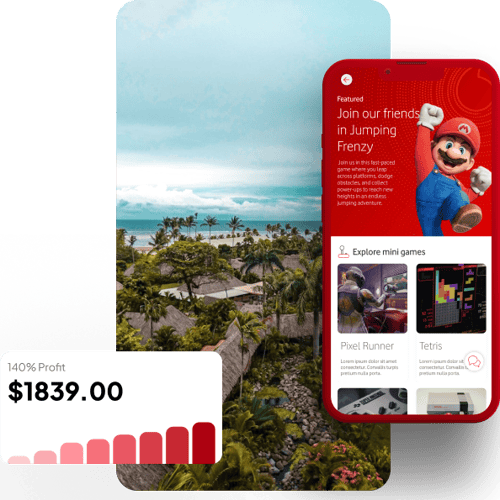
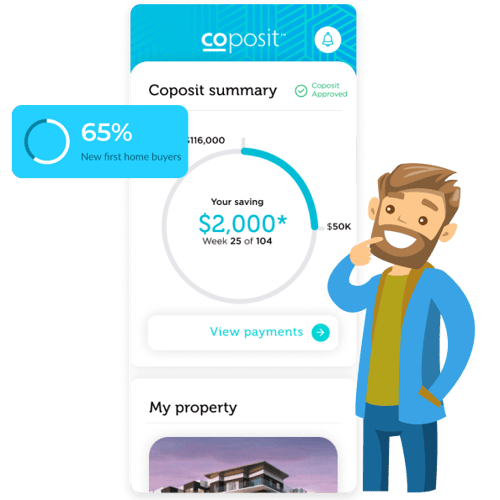
We built Coposit's platform from scratch, a PropTech system that lets first-home buyers secure a property with just $10K upfront. Now powering nationwide growth with 5M+ users served.
Read the Coposit case study →

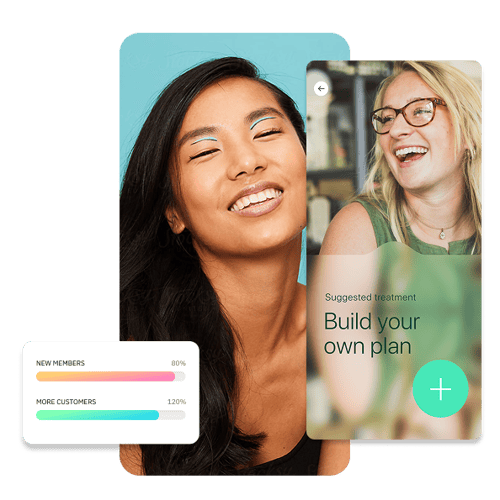
From zero to Australia's leading cosmetic tech platform. We built the omni-channel foundation that now supports thousands of clinics across Australia and the U.S.
Read the Fresh Clinics case study →
Built for performance, reliability, and deep device integration, where platform-native experience is non-negotiable. Right for latency-sensitive or hardware-dependent products.
Vodafone · News Corp · Optus
One codebase, two platforms, no compromise on quality. Our preferred starting point for most startups and scale-ups. Faster to market and lower cost.
Coposit · 5M+ users served
Secure, scalable web platforms designed to run real business operations, not just marketing sites. Built alongside your mobile product or as a standalone system.
UNSW · NSW Health · Cover-More
Design that makes your app easier to use, easier to trust, and easier to keep coming back to. Tested with real users before a line of code is written.
Reframing Autism · Glow Services
Conversational interfaces, recommendation engines, document processing, predictive analytics, and workflow automation. Scoped and costed, not bolted on.
Beforepay · Coposit
Architecture, deployment pipelines, and monitoring that keep your app fast, stable, and ready to grow. 24/7 monitoring is set up before your first user arrives.
ISO 27001 · 99.9% uptime SLA
Testing is built into every sprint, not left to the end. Automated and manual QA across devices, OS versions, and edge cases. We find any issues before the users do.
Zero critical bugs at launch policy
Apps that connect to the physical world including wearables, sensors, medical devices, and smart systems. Built for reliability and precision.
#1 Clutch Wearable App Developer
Payments, lending, personal finance, and investment platforms built to the security and compliance standards the industry requires.
Nuvei · Plenti · Beforepay
Patient-facing apps, clinical tools, and health data platforms. Built with the privacy standards and reliability that healthcare demands.
NSW Health · Health Synergy
Property search, rental management, buyer journey platforms, and marketplace tools. Coposit, Australia's fastest-growing first-home buyer platform, is a recent example.
Coposit · Rello
Large-scale platforms for organisations that require procurement compliance, ISO certification, and enterprise security.
Optus · UNSW · NSW Gov
Consumer-facing apps built for retention, growth, and monetisation. From dating apps to gaming platforms to lifestyle tools, these are products designed to scale past launch day.
50+ Top 10 global apps
Content platforms, streaming tools, and audience engagement apps. Built to handle the traffic spikes and reliability demands of media-scale audiences.
News Corp · Vodafone
Learning platforms, accessibility tools, and student engagement apps. Including Reframing Autism: built for an underserved community with complex accessibility requirements.
Reframing Autism · Cluey
Fleet management, field service, supply chain, and operations platforms. Built for reliability in environments where downtime costs money.
Bingo Industries · CT Freight
Our proprietary framework is applied across every mobile app development project. Strong foundations are built from day one across architecture, security, scalability, and testing.
Two-week sprints with a live working build at the end of every cycle. No status reports in place of working software. You see progress every fortnight, not at the end.
Cost and timeline are agreed and documented before development begins. Scope changes are priced separately and transparently; they never silently inflate your invoice.
Every engagement starts with a free Validation stage. Wireframes, user testing, and feasibility assessment are all delivered before a dollar is spent on development.
ISO 27001-certified processes applied from day one instead of retrofitted before launch. Penetration testing, data encryption, secure API design, and access control are standard practice.
Automated build, test, and deployment pipelines that keep releases fast and stable. New features ship without destabilising what already works.
WCAG 2.1 accessibility standards, App Store and Google Play compliance, and relevant industry regulation (HIPAA, PCI-DSS, Australian Privacy Act) built into the delivery process.
24/7 monitoring configured before your first user arrives. Issues are flagged by the system, not discovered by your users. Support retainers are agreed before launch, not after.

Our primary cross-platform framework. Pixel-perfect UI, excellent performance, single codebase for iOS and Android. The right default for most new builds.

Cross-platform development with JavaScript. Strong fit when your team has existing React expertise or you need a large third-party library ecosystem.
Native iOS (Swift) and Android (Kotlin) for products where performance, hardware access, or platform-specific behaviour makes native the right call.

Our primary web application stack. Fast, scalable, and SEO-ready. Used for web platforms, dashboards, and admin systems that run alongside mobile products.

Backend services, APIs, and data pipelines. Node for real-time systems and high-throughput APIs; Python for data processing, ML workloads, and AI integrations.

Architecture, deployment, and operations on AWS. EC2, RDS, S3, Lambda, and managed Kubernetes for teams that need infrastructure that scales without drama.

Production integrations with leading AI providers, not proofs-of-concept. RAG pipelines, fine-tuned models, and AI features that work reliably at scale.

Database architecture that matches your data model and access patterns. Designed for query performance and operational reliability from the first release.

Marketing Manager at Mondial VGL
We’re extremely impressed with EB Pearls’ work, technical skill, and ability to adapt, iterate, and learn new skills. Their high attention to detail and eternally positive attitude make working with EB Pearls a wonderful experience.
Product owner, BAXTA
Co-Founder, Intro Dating App
Founder, Whitebow Gift registry
Co-Founder, Intro Dating App
In a free 30-minute Discovery Session, you'll walk away with a clear sense of what to build, what it will cost, and whether we're the right fit - no pitch, no obligation.
Optional NDA before we talk — 30 minutes — No obligation to proceed
We'd rather be clear up front than waste your time, here's where we're the right fit, and where we're not.
Straight answers to the questions we’re asked most often about mobile app development, pricing, process, and what it’s like to work with us.
An app idea is worth building when you can clearly answer four questions:
Who has the problem you're trying to solve? How often do they experience it? What do they currently do about it? Why is your solution meaningfully better than others?
If the answers are vague, that's not a reason to abandon the idea — it's a reason to validate before you build. Validation means getting the concept in front of real potential users before committing to development. This can be done in 1–2 weeks with wireframes, a landing page, or a structured set of user interviews. The cost is negligible compared to building the wrong thing.
Signals that suggest the idea has legs: people are already solving the problem badly with workarounds, there's a clear first cohort of 100 users you can name and reach, and at least one person has said they'd pay for it — not just that they like it.
At EB Pearls, every engagement starts with a free Validation stage. We'd rather tell you an idea needs more testing than take your money to build something the market doesn't want.
After 900+ app builds, the same five mistakes appear in almost every expensive rebuild we've seen.
1) Building too many features in V1. The first version should validate the core problem, not replicate every feature you imagined. Complexity before validation is expensive guesswork.
2) Hiring developers before defining the product. Code written without a clear product strategy has to be rewritten when the strategy gets clearer. That happens every time.
3) Ignoring backend architecture. A poorly designed backend is invisible at launch and catastrophic at scale. It's the most expensive thing to fix retroactively.
4) Choosing the lowest quote. A $20k quote and a $100k quote are not the same product. The difference is in what isn't included — and you find out what that is after launch.
5) Launching without a growth plan. An app without a user acquisition strategy is a product nobody finds. Distribution is not the developer's job, but it needs to be someone's job before launch day.
Most rebuilds we see trace back to at least three of these five decisions.
A $10k app is almost always a prototype. A $200k app is a production platform. The difference is structural rather than cosmetic.
A $10k build typically uses template UI, minimal backend, no scalable infrastructure, limited QA, and no security hardening. It may look functional at launch, but it will struggle at 1,000 users and often fail completely at 10,000.
A $200k build includes custom architecture designed for growth, a production-grade backend, ISO-standard security practices, multi-environment testing, CI/CD pipelines, and a documented handover. It's built to run a business on, not just to demo.
The most expensive app is the one you build twice. Most rebuilds we see trace back to a $10k–$30k decision that felt like a saving at the time.
In Australia, start with iOS if you're targeting consumers. iPhone users represent the majority of the premium, high-engagement demographic that most early-stage apps need to validate first.
iOS users in Australia skew higher income, download more paid apps, and convert better on in-app purchases. If your first cohort of users is enterprise or government, the split is more even, and a cross-platform build from the start often makes more sense.
Globally, Android has a larger market share, so if your target market is Southeast Asia, India, or Latin America, Android first makes more sense. If you're targeting both platforms from launch, cross-platform (Flutter or React Native) lets you build once and deploy to both, which removes the choice entirely at a marginal cost premium over single-platform native.
Both Flutter and React Native are cross-platform frameworks that let you build iOS and Android apps from a single codebase. The differences matter depending on your team and product.
Flutter (by Google) uses the Dart language and renders its own UI components rather than using native platform components. This gives pixel-perfect consistency across platforms and excellent performance. It's our preferred choice for most new builds, particularly where the UI is custom and performance matters.
React Native (by Meta) uses JavaScript and maps to native platform components. If your team already has strong JavaScript or React experience, the learning curve is lower. The ecosystem is larger and more mature, with more third-party libraries available.
In practice, both are production-ready for the vast majority of apps. The choice often comes down to your existing tech stack, team familiarity, and specific feature requirements. We'll make a specific recommendation during scoping based on your project, not a blanket preference.
Yes — we use AI-assisted development tools across our engineering workflow, and we build AI-powered features directly into products. They are different things and both matter.
AI in our build process: our engineers use AI tools for code generation, review, and testing. This accelerates certain parts of development and catches issues earlier. Every line of production code is reviewed and signed off on by a senior engineer. AI doesn't ship unsupervised into your product.
AI features in your product: we build conversational interfaces, recommendation engines, document processing, predictive analytics, and workflow automation. These are scoped and costed like any other feature, not retrofitted as a selling point.
On cost: AI tooling reduces certain build costs at the margins, but it doesn't halve a project budget. Architecture, product design, QA, security, and integration still require experienced engineers. A credible app built to last can't be vibe-coded for $5k. The risk isn't the upfront cost, it's the rebuild cost 18 months later.
Plan for 15–20% of your build cost per year in ongoing maintenance, plus infrastructure costs that vary by usage.
Infrastructure typically runs $200–$2,000/month depending on your server setup, database size, and traffic volume. On top of that, budget for annual app store compliance updates, iOS and Android OS version updates (Apple and Google release major updates yearly), security patches, and dependency upgrades.
If you're adding new features, this is scoped and costed separately. Maintenance doesn't refer to evolving the product, but covers keeping what you have working, secure, and compliant.
At EB Pearls, post-launch retainer packages cover all of the above with a fixed monthly fee. You'll know your maintenance cost before you launch, not after.
Mobile app development usually starts with discovery, where the idea, users, scope, and technical approach are clarified.
From there, the product moves into UX and UI design, followed by technical specification and architecture, then sprint-based development, testing, launch, and post-launch support.
The exact timeline varies, but the strongest builds follow a clear process from idea to launch rather than jumping straight into code.
The Discovery phase at EB Pearls will outline this process clearly for you and your app.
We use fixed-price delivery for scoped projects. The cost is agreed before development starts. Scope changes are documented and priced separately; they don't silently inflate your invoice.
No agency can promise that a software project will never change. In reality, scopes change, businesses change, markets change. What we can offer is a process that makes overruns unlikely and visible early: two-week sprint demos, fortnightly reporting, and a dedicated Account Manager mean nothing drifts unnoticed for weeks.
Our 4.9-star Clutch rating across 900+ delivered projects is the most credible external evidence we can point to. We also encourage you to speak with past clients directly during due diligence (we'll make the introductions).
Mobile apps don't fail because of poor development, they fail because of weak product foundations that were never addressed before the build began.
The three most common causes: building features before the core problem is validated (so users don't actually want what was built), architecture that can't handle real usage once traction arrives, and no clear user acquisition or retention strategy after launch — so the app is technically functional but commercially invisible.
Secondary causes include: no monitoring, so bugs are discovered by users rather than the team, update cycles that slow to a crawl because the codebase wasn't designed for iteration, and no post-launch support when the agency has moved on, and nobody is minding the product.
Our Validate → Design → Scope → Build → Launch framework is structured specifically to surface and resolve these risks before major development investment begins.
Yes. Roughly one in three new engagements at EB Pearls starts with a live app that needs to scale, be stabilised, or have a new team take it over.
We begin every takeover with a technical audit: codebase quality, infrastructure, architecture, security posture, and scalability risk. You get a plain-English report which includes what's solid, what's fragile, and what the cost of inaction looks like over the next 12 months.
If your current setup is sound, we'll tell you. If there are structural issues that will cost you later, we'll show you exactly what they are and what a fix costs. We don't manufacture problems to create work.
You own everything. All source code, design files, architecture documentation, and intellectual property created during your project are fully transferred to you on final payment. We retain no rights.
Handover includes full repository access, deployment credentials, API documentation, and a structured knowledge transfer package — whether you continue with us after launch or not.
For clients who want protection before sharing project details, we offer an optional NDA before the first call. We're ISO 27001 certified, which means our data handling meets internationally recognised security standards — a procurement requirement for many finance, health, and government clients.
Post-launch support is scoped and agreed before development starts, not offered as an upsell after handover.
Every project includes a Launch and Support phase: launch monitoring, bug fixes, stabilisation, and a 30-day post-launch window where we're on call for critical issues. For ongoing support beyond that, we offer retainer packages covering maintenance, security updates, performance monitoring, and continued feature development.
Around 60% of our clients have been with us for more than three years. Several have been with us for over a decade, including clients whose apps now support hundreds of thousands of users. Post-launch is a phase, not an afterthought.
Book a free Discovery Call. This is a 45-minute conversation with no sales pitch and no obligation to proceed.
We'll cover what you're building, where you are now, and what success looks like. By the end, you'll have a clear sense of fit, a rough cost and timeline range, and an outline of next steps if you want to move forward.
If EB Pearls isn't the right fit for your project, we'll tell you in that call and point you toward who might be. We've turned down projects we couldn't deliver well. It's a short-term loss that keeps our track record intact.
Mobile apps can create value across many sectors, but they are especially useful in fintech, healthcare, retail, and logistics, where speed, user experience, real-time data, automation, and secure transactions all matter.
At EB Pearls, we have over 20 years of experience working with founders and businesses across industry verticals.
Competition almost always validates demand. It means people are already paying for a solution to the problem you want to solve.
The more useful questions are: is the existing market underserved in a specific segment, geography, or use case? Can you solve the problem with a meaningfully better UX? Does AI or a different technical approach create an advantage that incumbents can't easily replicate? Is there a niche within the broader market that the dominant players ignore?
Uber entered an existing market. Airbnb entered an existing market. Canva entered an existing market. First-mover advantage is real, but it's rarely the deciding factor. Execution, focus, and distribution usually matter more.
If you're concerned about a specific competitor, bring it to your discovery call. We'll give you an honest read on whether the differentiation is strong enough to build on.
A production-ready mobile app in Australia costs between $50,000 and $500,000+, depending on complexity, platform, and scope.
A scoped MVP on a single platform typically starts around $50,000–$80,000. A dual-platform app with custom integrations and a backend sits between $150,000–$300,000. Complex platforms with AI features, third-party data integrations, and enterprise-grade security can exceed $500,000.
Every EB Pearls project is priced in clear stages: Validate (free), Design (from $15k), Scope (from $10k), Build (from $50k). The total cost is always agreed and documented before development begins, and there are no hidden fees or invoice surprises.
One number worth paying attention to: based on our delivery data across 900+ projects, the average cost of rebuilding a mid-market app because of weak foundations is around $380,000. Getting the architecture right the first time around is almost always cheaper.
Most production mobile apps take 6 to 12 months from first conversation to launch. This is typically broken into five stages, each with a fixed timeframe and a defined output.
Validation takes 1–2 weeks and is free. Design takes 4–8 weeks. Scoping takes 2–4 weeks. Build takes 3–6 months. Launch and support are ongoing. Your delivery timeline is agreed and documented at the Scope stage, before a line of code is written.
The most common cause of timeline overrun isn't slow development, it's scope that wasn't locked in before the build began. That's why the Scope stage exists and what it's designed to prevent. If you need a faster MVP, a 3–4 month build is achievable with a tightly defined feature set. We'll tell you exactly what gets cut to hit that date.
For most startups and scale-ups, cross-platform (Flutter or React Native) is the right call. It's the same quality, lower cost, and faster to market. Native is the right call when your app's performance demands it.
Native (iOS and Android separately) gives you the highest performance and deepest access to device hardware. It's the right choice for apps that are complex, latency-sensitive, or heavily integrated with device features like real-time sensors, advanced camera processing, or biometrics. It costs more because you're building and maintaining two codebases.
Cross-platform (Flutter or React Native) shares the majority of your codebase across both platforms. Modern frameworks are excellent — most users genuinely can't tell the difference. For most founders and product teams, this is the right starting point. You can go deeper into native later if usage patterns justify it.
We build both. We'll recommend the right approach for your specific product in the discovery call, not the one that's easiest for us to deliver.
In short, yes. There are three distinct approaches to achieve this, each with different costs, performance, and scalability trade-offs.
Progressive Web App (PWA): your existing web platform is made installable and usable offline. Lowest cost, fastest to deliver, but limited access to native device features and no presence in the App Store or Google Play. Best for simple use cases where you want mobile reach without a full app build.
Cross-platform mobile app with API integration: a new mobile app is built (Flutter or React Native) that connects to your existing backend via API. Your web platform continues to run as-is. This is the most common approach for businesses that have an established web product and want a first-class mobile experience alongside it.
Native mobile app: a fully native iOS and/or Android app built from scratch, integrating with your existing systems. Highest performance and deepest device integration, at the highest cost.
The right choice depends on what your existing platform is built on, what mobile features you actually need, and your budget. We'll assess your current architecture in the discovery call and give you a direct recommendation.
There are six primary mobile app revenue models, and most successful apps use a combination of two or more.
1) Subscriptions: users pay a recurring fee for access. The highest-LTV model and the most defensible long-term. Ideal for tools, productivity apps, and content platforms.
2) Marketplace commissions: the app takes a percentage of transactions between buyers and sellers. Scales with volume rather than user count.
3) In-app purchases: users buy digital goods, credits, or feature unlocks inside a free app. Common in gaming and consumer apps.
4) SaaS licensing: the app is the front-end of a B2B software product, priced per seat or per organisation. Common in enterprise and vertical SaaS.
5) Transaction fees: a flat or percentage fee on financial transactions processed through the app. Common in fintech, payments, and logistics.
6) Advertising: generate revenue from serving ads to users. A high volume is required. Usually, this acts as a secondary model rather than a primary.
The monetisation model should be decided before development begins because it directly shapes the features, infrastructure, and integrations required. We discuss this during the Validate stage, not as an afterthought.
Sydney has a mix of freelancers, offshore-led teams, and specialist app development companies.
EB Pearls is one of the established mobile app development companies in Sydney, with experience across product discovery, UX/UI, custom mobile app development, QA, launch, scaling, and long-term support for startups, scale-ups, and enterprise teams.
We work in two-week sprints. At the start of each sprint, we agree on what gets built. At the end, you see it working; a live build, not a status update.
Your team gets a dedicated project channel, access to our project management platform, and a fortnightly demo. Your Account Manager handles everything non-technical. Your Engineering Manager owns the build team directly. There's no single point of failure and no one person carrying all the context.
If something needs to change mid-sprint, whether it's scope, priority, or direction, we flag it immediately and agree on the adjustment. You will never hear about a problem for the first time at delivery.
Most rebuilds aren't caused by bad development; they're caused by decisions made before development started.
The most common causes we see across 900+ projects: architecture that wasn't designed to scale, a codebase with no documentation that no new developer can work in, security vulnerabilities that only surface under scrutiny or growth, technology choices made for speed rather than longevity, and no testing infrastructure — so regressions compound with every release.
It's a pattern we see consistently: a founder gets a cheap build done quickly, launches, gets traction, and then discovers the app can't handle real usage. The rebuild costs more than the original build would have cost, if done properly. Our internal data puts the average mid-market rebuild at around $380,000.
This is exactly what the Built to Last™ system is designed to prevent. Strong foundations from day one cost more upfront. They cost significantly less over three years.
We've delivered for Optus, NSW Health, the University of Sydney, News Corp, and WWF, so we understand what enterprise and government procurement actually requires.
We hold ISO 9001 (quality management) and ISO 27001 (information security) certifications, and can provide documentation to support vendor due diligence, security reviews, and panel registration processes. Larger engagements include a dedicated Account Manager, Engineering Manager, defined escalation paths, sprint reporting, and executive-level visibility as required.
If your procurement process involves an RFT, capability statement, or panel pre-qualification, contact us early. We've been through it before and can support the process from the start.
At an early stage, three roles cover the critical bases: a founder or product owner who owns the vision and makes decisions, a growth or marketing lead who owns user acquisition, and a customer support function (even if that's the founder initially).
You don't need an in-house engineering team to launch. That's what a product partner like EB Pearls provides during build. Post-launch, if you're on a retainer, we continue to cover development. Many of our clients operate successfully for 2–3 years before hiring their first internal engineer.
As you scale, the team expands to include a dedicated Product Manager to manage the roadmap, engineering capacity (either in-house or continued with us), and an operations function as the business complexity grows. The right time to hire in-house engineers is when your product roadmap is stable enough that retained context in the codebase justifies a full-time salary, usually somewhere past Series A.
The most reliable protection against copying is speed to market and execution quality, not secrecy.
Ideas are not protectable. Execution is. The advantage of working with an experienced team is that you reach the market faster, with a better product, than a copycat starting from scratch. By the time someone copies a well-executed app, you have users, data, retention, and feedback loops they don't have.
That said, practical protections are available, and we support all of them: an optional NDA before your first call, full IP transfer on completion so you own the codebase outright, and ISO 27001-certified data handling throughout the project. For clients building in regulated industries, we can also advise on relevant IP registration and trade secret protections.
EB Pearls is headquartered in Sydney. Our 200+ strong engineering, design, and QA team is based in Kathmandu, Nepal. These are full-time EB Pearls employees, not freelancers or contractors. We've operated this model since 2005.
Your Account Manager and engagement lead are Sydney-based. Your build team is led by one of our senior Engineering Managers — Karun Shakya, Narendra Kathayat, Rupesh Sharma Rajopadhyaya, or Ray Dolendra Lal, depending on your project type. You'll meet your Engineering Manager before development begins.
This structure is why we can deliver enterprise-grade work from $50k when comparable Sydney-only agencies often quote $200k+. The cost difference is in salary geography, not in quality or accountability.
Share a few details about your project and what you need help with. Once you submit the form, you’ll be able to book your free discovery call.