150%
Engagement uplift — Vodafone squad
"Software isn't finished when it launches. It's finished when the business no longer needs to think about it."
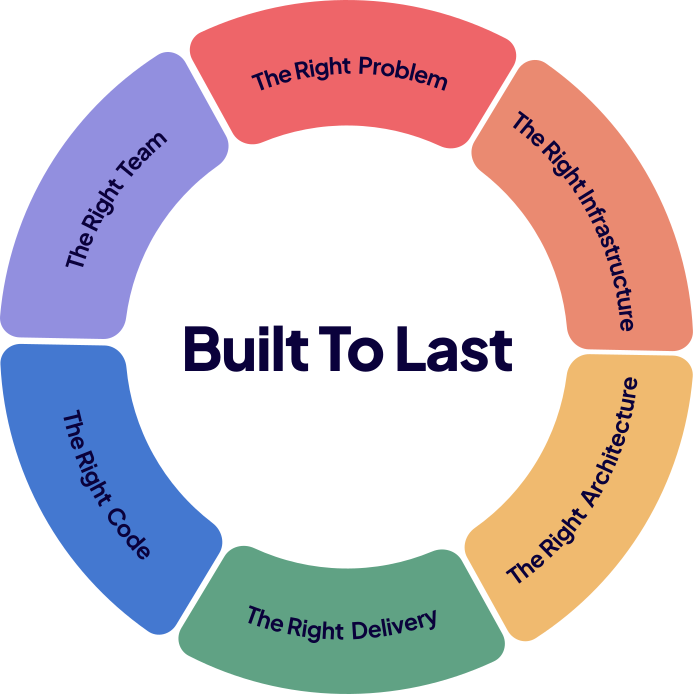
Most software agencies measure success at launch. We measure it differently. Built to Last™ is the framework we apply to every EB Pearls project — not as a premium tier, not as an optional upgrade. As the standard. Because we've seen what happens when these foundations are missing, and we've spent 20 years learning what it takes to build software that genuinely lasts.
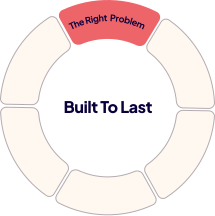
A fast squad building the wrong thing is more expensive than a slow squad building the right one. Most TaaS engagements don't fail because the engineers aren't capable. They fail because the engagement was scoped around outputs — features, sprints, hours — rather than outcomes.
Before the squad is assembled, we run the Engagement Definition Session. Not a requirements call. A deliberate conversation about commercial outcomes, roadmap priorities, and what success looks like in 12 months.
⚠ You're missing this if:
"From the very first meeting, EB Pearls gave us a clear roadmap, a complete tech audit, clean documentation, and — for the first time — real confidence."— Bishal Dahal · ActivfyApp · TitanTech Support
A structured session before the squad is assembled. We map the commercial outcome, the 12-month roadmap, the success criteria, and the constraints — budget, timeline, regulatory, technical. Not a requirements gathering call.
The specific, measurable outcomes that determine whether the engagement is working — for the product, the business, and the board. The numbers that tell you whether the squad is delivering commercial value. Defined before sprint one, tracked every month.
A structured approach to roadmap prioritisation — commercial impact, technical dependency, delivery risk, and effort. So when a new priority arrives mid-quarter, there's an agreed framework for evaluating it rather than a political conversation about what gets dropped.
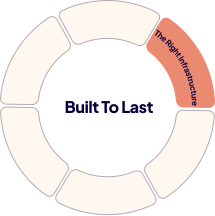
A squad working without proper engineering infrastructure is like a construction crew without scaffolding. They can still build — but slower, less safely, and with more rework. Most TaaS failures aren't people problems. They're infrastructure problems nobody wants to bill for setting up.
CI/CD, monitoring, environments, and deployment pipelines — configured before the first feature ships, not wired in retrospectively when a production incident makes them urgent.
"What impressed us most was that support did not stop at launch. When issues came up, they were responsive and clear. It felt like we had a partner behind the product."
— Kym Herbert · Optus
A structured review of the engineering environment before sprint one begins. CI/CD pipelines configured, environments separated, monitoring live, and security architecture reviewed.
Automated build, test, and deployment pipelines configured before the first feature ships — so every change passes the same quality gates regardless of who triggered it or what time it happened.
Properly separated development, staging, and production environments — with access controls, secrets management, and security architecture reviewed before any sensitive data enters the system. For regulated industries and ISO 27001 compliance.
Performance benchmarks documented and tested before launch — load times, API response, database query performance. Tested at current scale and at 10x. The squad that builds a system is responsible for knowing its limits before users discover them.
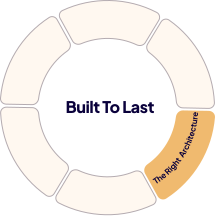
Architecture is the most expensive decision your squad makes. Not because it costs much to get right — but because it costs an enormous amount to get wrong. A platform that requires a full rebuild 18 months after launch didn't need better engineers. It needed a better architectural review before sprint one.
Architecture owned and documented from day one so when squad members change — and they will — the system doesn't degrade with them.
⚠ You're missing this if:
"As usage grew, our app kept up. We didn't hit a wall of slower releases, unstable features, and constant firefighting. The foundations were strong from the start — it was one less thing to think about." — Shimneet Chand, Product Manager · Vodafone Fiji
Every significant architectural decision documented — what was decided, what alternatives were considered, why. Written into the codebase from sprint one. When a squad member leaves, or a new engineer joins, the answer to "why is it built this way?" is already there.
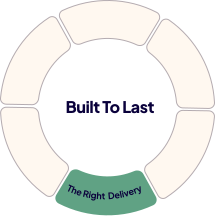
Delivery is where most managed team engagements quietly fail. Not in a single dramatic moment — in a slow accumulation of undocumented decisions, unreported risks, and scope conversations nobody wrote down.
Every sprint ends with working software demonstrated to stakeholders — not a status update, not slides about what was built. Actual software. And leadership always knows where the engagement stands.
"No black holes. No guesswork. Clear, open lines and solutions-first conversations. High standards across the board — it felt like working with a global consultancy." — Andrew Penn, Board Advisor · CryptoNest · Melbourne
Weekly velocity reports showing what was delivered, what's in progress, and what's at risk. Monthly KPI review against the outcome metrics agreed at engagement start — velocity, quality, cost per deliverable, and test coverage. In plain language.
Every change to scope, timeline, or cost documented — who approved it and what it means for delivery. The register that prevents the end-of-quarter surprise. Your leadership can open it at any point and understand why the engagement looks.
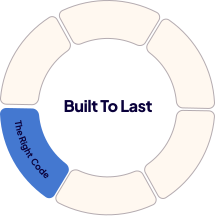
In a TaaS engagement, engineers change. The codebase shouldn't degrade when they do. The standard isn't "the current squad understands it" — it's "any competent engineer could be productive in three days."
AI writes code faster than ever. Without quality gates, standards, and documentation maintained sprint-to-sprint, AI-augmented squads can create unmaintainable systems at speed. The right code pillar is what prevents that.
"What stood out straight away was how clear they were on cost. We got a realistic estimate early, understood what was included, and there were no hidden extras later." — Chris Ferris · Founder · Coposit · PropTech
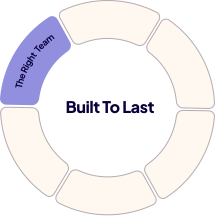
The squad is only as good as the structure around it. Most TaaS engagements fail not because the engineers weren't capable — but because when one left, the knowledge went with them. Because there was no named person accountable for the outcome. Because the client never knew who to call.
Structure, accountability, and continuity — so your product is genuinely owned, without single points of failure, for as long as the engagement runs.
"The team blended in so well it felt like working with an in-house team. We noticed a significant increase in development velocity, and multiple key features rolled out on time." — Janaya Nheu · MYBOS · Staff Augmentation
 "Will the squad actually deliver what we need?"
 "Will it hold as the product and team grow?"
 "Can we take full ownership when the time comes?"