
"EB Pearls was the only team that pushed back on parts of our design before we signed anything. That told us everything we needed to know about how they operate."
— Co-founder · HealthTech SaaS · Sydney
Your Squad. Delivered. Here's Exactly How.
From the first discovery call to sprint 1 in two weeks — here is the complete process we use to assemble, onboard, and run your dedicated development squad.
.png?length=500&name=TAAS%20(1).png)
How We Work Together Regardless Of Your Situation.
Two things are consistent across every TaaS engagement: who owns what, and how we keep you informed. You'll have clarity on both before the first sprint begins.

WHAT WE HANDLE
We own the engineering operation end-to-end: squad assembly and vetting, HR, onboarding, tooling, sprint ceremonies, code quality, QA, CI/CD, documentation, and performance management. If an engineer underperforms or leaves, we handle replacement — with zero disruption to your delivery cadence.

WHAT WE NEED FROM YOU
You own the product: vision, roadmap prioritisation, business context, and acceptance decisions at sprint demos. We need a senior stakeholder available for weekly check-ins and fortnightly sprint reviews. You attend the demos — not the engineering ceremonies. Your next sprint should be faster with us, not slower.
How We Work Together — Regardless of your Situation.
Two things are consistent across every TaaS engagement: who owns what, and how we keep you informed. You'll have clarity on both before the first sprint begins.
Weekly
Regular progress check-in
We + You
Sprint progress, blockers, decisions needed, velocity update. Kept to 30 minutes.
Fortnightly
Sprint review & demo
We + You
Live demo of completed features. Feedback and prioritisation for next sprint.
MONTHLY
KPI & performance report
We + You
Velocity, quality metrics, cost per deliverable, team health, and roadmap.
QUARTERLY
Strategic planning session
We + You
Roadmap alignment, team composition review, technology decisions.
LAUNCH
Build It Right The First Time. The Rebuild Costs Twice As Much.
The difference between a $200k launch and a $400k rebuild 18 months later is almost always the architecture decisions made in weeks 1–4. You need engineers who think before they code, push back on bad ideas, and ship something that holds at scale.
We start every new build with an architecture review and risk register — before a line of code is written. Then we assemble the right squad, set up your tooling, and have you in sprint 1 within two weeks of sign-off.
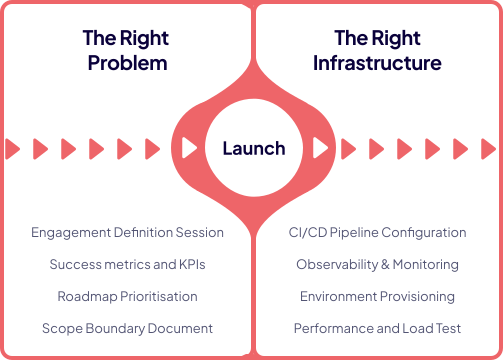
Before we recommend a team size, stack, or approach, we need to understand what you're building, what constraints exist, and what "done" looks like. This conversation is run by a senior engineer — not a sales person. You'll leave with an honest assessment of complexity, risk, and cost range — whether you proceed with us or not.
| Who | What |
|---|---|
| WE | Review the product brief, identify technical risks, and ask the questions most teams forget to ask before they start building |
| We | Provide an honest cost range and indicative timeline before you commit to anything |
| We + You | Align on scope, priority order, technical constraints, and definition of success for the first milestone |
| You | Share the product vision, any existing technical decisions, budget range, and timeline expectations |
Every engagement starts with an architecture review and documented risk register — before a line of code is written. This is where we challenge assumptions, identify decisions that will be expensive to change later, and set the technical direction that the squad will execute against. Most clients say this is where we earn our retainer.
| Who | What |
|---|---|
| WE | Define the technical architecture: frontend, API layer, data model, infrastructure, third-party integrations, and scalability approach |
| We | Recommend stack, tooling, and CI/CD pipeline based on your scale requirements and team preferences |
| We + You | Walk through architecture decisions together and confirm or adjust based on business constraints |
| You | Review and sign off on architecture and risk register before squad assembly begins |
We draw from a bench of 320+ pre-vetted engineers to assemble a squad matched to your stack, complexity, and culture. Every engineer assigned to a new build engagement has been through a technical assessment specific to your project — not a generic screen. You meet the team before sprint 1 begins.
DELIVERY LEAD
Account Manager
Your single point of contact. Coordinates between your team and the squad. Owns escalation.
ENGINEERING
Engineering Lead
Senior engineer who owns technical decisions, code standards, and architecture integrity across the squad.
ENGINEERING
Developers (1–4)
Matched to your stack and seniority needs. Scaled up or down with 30 days' notice.
QUALITY
QA Engineer
Embedded from sprint 1. QA runs in parallel — never at the end. Every PR reviewed before merge.
PRODUCT (OPTIONAL)
Project Manager
Manages sprint ceremonies, backlog grooming, and reporting. Available if you don't have internal PM capacity.
INFRASTRUCTURE (OPTIONAL)
DevOps Engineer
CI/CD pipeline, cloud infrastructure, deployment automation. Added where infrastructure complexity warrants.
| Who | What |
|---|---|
| We | Select and assign engineers from the bench based on your stack, seniority requirements, and project complexity |
| We | Handle all HR, contracts, onboarding, and tooling setup for every squad member |
| We | Configure your development environment, repository, CI/CD pipeline, and project management tooling |
| We + You | Run a team introduction session — you meet the engineers before sprint 1 begins |
| You | Provide access to any existing systems, brand assets, and stakeholders the squad needs to work effectively |
Every two weeks you see working software — not a status report. Sprint demos are mandatory, not optional. Every sprint ends with a shippable build, and every decision made during the sprint is documented. You never have to chase us for an update.
| Who | What |
|---|---|
| WE | Deliver working, tested features in every sprint — no partial credit for "almost done" |
| We + You | Run sprint planning, daily standups, retrospectives, and demos — you attend the demo, not the ceremonies |
| YOU | Attend sprint demos (typically 60–90 minutes per fortnight). Prioritise the backlog between sprints. Make product decisions when trade-offs arise. Everything else is managed by the PM. |
| We | Enforce code review, automated testing, and CI/CD on every pull request — including AI-generated code |
| We | Maintain documentation sprint-by-sprint: architecture decisions, runbooks, and API docs updated continuously |
| We + You | Review and prioritise the backlog fortnightly — you always control what gets built next |
| You | Attend sprint demos, provide feedback, and make prioritisation decisions when trade-offs arise |
Launch is a structured process — not a handover. We run a readiness review, configure monitoring and alerting, and confirm escalation paths before the first real user arrives. The same team that built it is accountable for it post-launch.
| Who | What |
|---|---|
| WE | Run a pre-launch readiness review: performance, security, monitoring, rollback plan, and escalation paths |
| We | Configure production monitoring and alerting before the first user arrives |
| We | Provide a structured 30-day post-launch support window — you know exactly what's covered and who to contact |
| We | Deliver full handover documentation: architecture, runbooks, deployment procedures, and knowledge transfer sessions |
| You | Activate marketing and user acquisition — we'll be watching the system while you do |
Typical New Build Timeline
Discovery & scoping
1-2 Day
Architecture review
1-2 Weeks
Squad assembly
1-2 Weeks
Sprint delivery
Ongoing 2 weeks sprints
Launch
1-2 Weeks
Post-launch support
30 days min
Ready To Start? Book A Free Scoping Call.
60 minutes. Senior engineer, not a sales person. You'll leave with a cost range, a risk assessment, and an honest answer on whether TaaS is the right model for your build.
SCALE
Engineers Who Plug In — Not Contractors Who Slow You Down.
Hiring 3–4 senior engineers takes 4–6 months and costs $80–120k in recruitment alone. By the time they're effective, the roadmap has already shifted. You need engineers who integrate with your tools, your standards, and your sprint cycle from week one.
The test: your next sprint should be faster with our engineers, not slower. If it isn't, something is wrong — and we'll fix it before sprint 3.
The test: your next sprint should be faster with our engineers, not slower. If it isn't, something is wrong — and we'll fix it before sprint 3.
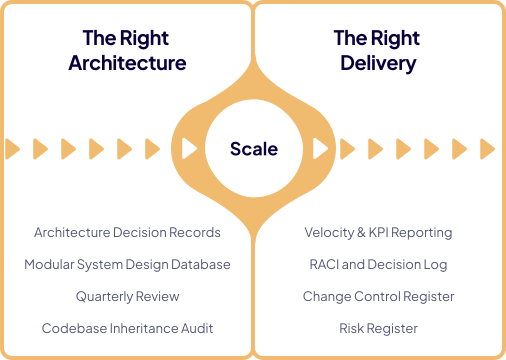
We need to understand your current team, your tech stack, your sprint process, and where the bottlenecks are before we recommend squad composition. The goal is integration that accelerates your next sprint — not additional coordination overhead.
| Who | What |
|---|---|
| we | Map your current team capacity, sprint velocity, and where the gaps are creating the most friction |
| We | Recommend squad composition and seniority mix based on your actual bottlenecks — not a standard package |
| We + You | Agree on integration approach: your tools, your code review process, your definition of done |
| You | Share your tech stack, current sprint process, and the specific skills or capacity you need to add |
Engineers are matched to your specific stack, seniority requirements, and team culture — not assigned from a generic bench. They integrate into your tools, your workflow, and your PR process. Your code review standards apply from day one. We don't introduce a parallel process.
| Who | What |
|---|---|
| We | Match engineers to your stack (React, Node, Python, Swift, etc.) and seniority level with a specific project brief — not a generic assessment |
| We | Set up engineers in your tools: Jira, Linear, GitHub, Slack, Notion — whatever you use, they use |
| We | Brief engineers on your code standards, PR process, and definition of done before their first commit |
| We + You | Run an introduction session between the new engineers and your internal team before sprint begins |
| You | Provide codebase access, documentation, and a backlog of tickets ready for the first sprint |
We track velocity and integration quality — not just hours delivered. If an engineer isn't meeting your standards by sprint 3, we address it. If your roadmap changes and you need a different skill set, we adjust the squad. No redundancy process, no severance, no recruitment cycle.
| Who | What |
|---|---|
| we | Monitor engineer performance against your velocity and quality metrics — not just internal EB Pearls standards |
| We | Handle all performance management, replacement, and skill-set changes without disrupting your sprint cadence |
| We | Provide monthly KPI reports: velocity contribution, PR quality, code review turnaround, and team health |
| We + You | Review squad composition quarterly — adjusting seniority, team size, and skill mix as the roadmap evolves |
| You | Scale the squad up or down with 30 days' notice — no lock-in beyond the notice period |
Book A Capacity Planning Call
Tell us where your bottlenecks are. We'll tell you what squad composition would fix them — and whether TaaS is the right model for your situation.
RESCUE
Diagnose Before You Prescribe. We Start With An Audit.
Your codebase is paying compound interest on decisions made three years ago. Every new feature costs twice what it should. You're not sure whether you need a rewrite or targeted fixes — and you're worried you'll get the wrong answer from whoever's selling the solution.
We start with a codebase audit — not a pitch. We'll tell you if a rewrite is warranted. We'll also tell you if it isn't, even if that means less billing for us.
We start with a codebase audit — not a pitch. We'll tell you if a rewrite is warranted. We'll also tell you if it isn't, even if that means less billing for us.
Before we recommend anything, we assess what's actually wrong. We look at the codebase, architecture, test coverage, infrastructure, security posture, and CI/CD pipeline — and identify what's creating the most drag, risk, and hidden cost. We'll tell you what to fix and in what order, regardless of whether you proceed with us.
| Who | What |
|---|---|
| We | Run a code audit across architecture quality, test coverage, security posture, performance bottlenecks, and dependency health |
| We | Identify what's solid, what's fragile, and what's on the critical path — mapped against your most common failure modes |
| We | Deliver an honest assessment: rewrite, targeted refactor, or stabilisation first — with the reasoning for each recommendation |
| We + You | Walk through findings with your engineering lead and agree on a prioritised remediation approach |
| You | Provide codebase access, infrastructure documentation, and context on where the biggest operational pain is today |
We never touch legacy code without a safety net. Before any refactoring or feature work begins, we establish automated test coverage and CI/CD. This is non-negotiable — it's what lets us make changes without creating new instability. Stability first. New capability second. Always phased.
| Who | What |
|---|---|
| We | Establish automated test coverage on critical paths before touching any legacy code |
| We | Configure CI/CD pipeline so every change is validated automatically before it reaches production |
| We | Address the highest-impact bottlenecks first — the ones creating the most operational risk and delivery drag |
| We + You | Review progress sprint by sprint — you approve prioritisation before any significant refactoring begins |
| You | Confirm which parts of the system are highest priority to stabilise based on business and operational impact |
Once the foundations are stable, we move into normal sprint delivery — features, performance improvements, and new capability — with confidence that each change won't create new regressions. Most clients see a meaningful improvement in release confidence and velocity within 60 days.
| Who | What |
|---|---|
| We | Deliver new features in 2-week sprints, with automated regression testing validating every release |
| We | Continue incremental improvement of code quality and test coverage alongside feature delivery |
| We + You | Review delivery velocity and code health metrics monthly — comparing against the pre-engagement baseline |
| You | Control feature prioritisation — what to build next is always your decision, not ours |
Book A Free Codebase Audit
Tell us what's wrong. We'll assess the codebase and give you a prioritised remediation plan — before you commit to anything.
EVOLVE
You Own The Roadmap. We Own The Execution.
You have 12–24 months of roadmap. What's not clear is how to resource it without spending 6 months recruiting, 3 months onboarding, and then discovering that managing engineers is a full-time job on top of running the product.
We run the engineering operation. You run the product. Monthly KPI reports, quarterly planning sessions, and a replacement guarantee that means attrition never disrupts delivery.
We run the engineering operation. You run the product. Monthly KPI reports, quarterly planning sessions, and a replacement guarantee that means attrition never disrupts delivery.
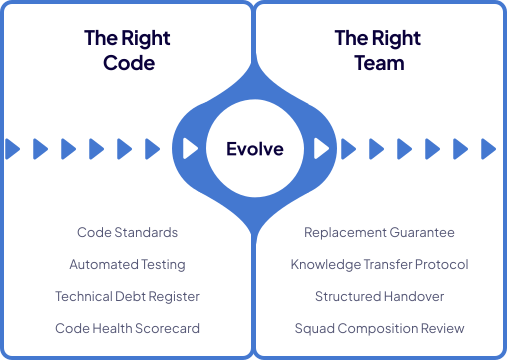
Long-term engagements start with a different conversation — one about your 12-month roadmap, your milestones, your team culture, and how you want to run the product operation. We'll tell you the right squad size, composition, and governance model for your roadmap before you commit.
| Who | What |
|---|---|
| We | Review your 12-month roadmap and recommend squad composition, seniority mix, and engagement model |
| We | Define the governance model: reporting cadence, KPI framework, escalation paths, and replacement guarantee terms |
| We + You | Agree on success metrics for the engagement — velocity, quality, cost per deliverable — before sprint 1 begins |
| You | Share the 12-month roadmap, any existing technical documentation, and your expectations on autonomy vs. oversight |
Long-term engagements get a dedicated squad — the same engineers, sprint to sprint, for the full engagement. Continuity is not optional in a 12-month relationship. Engineers are onboarded with a deep understanding of your product domain, not just your codebase.
| Who | What |
|---|---|
| We | Assemble a dedicated squad — engineers matched to your domain, not rotated in from a generic pool |
| We | Run a structured 2-week deep onboarding: product context, business domain, technical architecture, and stakeholder relationships |
| We | Handle all HR, contracts, performance management, and replacement with a guarantee: no attrition disrupts your delivery |
| We + You | Set up the quarterly planning rhythm, KPI framework, and escalation paths before sprint 1 |
Long-term engagements run on a quarterly planning rhythm — with clear milestones, velocity targets, and monthly KPI reports that give you full visibility on what's being delivered and at what cost. You own the roadmap. We own the execution.
| Who | What |
|---|---|
| We | Deliver against the quarterly roadmap in 2-week sprints with velocity and quality metrics tracked from sprint 1 |
| We | Provide monthly KPI reports: sprint velocity, code quality metrics, test coverage trends, and cost per deliverable |
| We | Manage the full engineering operation: HR, performance, tooling, documentation, ceremonies, and reporting — you focus on the product |
| We + You | Run quarterly planning sessions — reviewing the previous quarter's delivery and setting goals and milestones for the next |
| You | Control roadmap prioritisation — what gets built and in what order is always your decision |
Book A Team Planning Session
Bring your 12-month roadmap. We'll tell you the right squad composition, governance model, and cost range — before you commit to anything.
Still Have Questions?
A 60-minute call will answer most of them. If you're not ready for that, these cover the most common concerns from clients across every type of engagement.
EB Pearls can have a dedicated squad in active sprint within 2–3 weeks of contract sign-off. For capacity expansion engagements (Situation 02), engineers can be in your sprint cycle within 2 weeks. We draw from a bench of 320+ pre-vetted engineers, so squad assembly does not require a new hiring process.
We handle it — and we guarantee a replacement within 2 weeks without disrupting your sprint. All HR, performance management, and replacement is our responsibility, not yours. This is the replacement guarantee written into every TaaS contract. In our 20-year history, attrition has never disrupted a client's delivery cadence.
No. You control what gets built and in what order — that's always your decision. We handle how it gets built and the engineering operation that delivers it. Significant technical decisions are documented and presented for your review and approval. You attend sprint demos, not sprint ceremonies — but you can be as involved in the engineering as you want to be.
Engineers are based in Kathmandu, Nepal — full-time EB Pearls employees, not contractors. Account managers and client engagement leads are Sydney-based. The Nepal-Australia timezone overlap (approximately 4–5 hours depending on daylight saving) is structured into the sprint cadence so standups, demos, and check-ins fit your working day without late nights on either side.
You do. 100%. All code, documentation, architecture decisions, and IP created during the engagement belongs to you on delivery. Written into every contract without exception. You can take it to another team, hand it to an internal developer, or continue with EB Pearls. We operate under NDA from the first conversation.
Yes. Scale up or down with 30 days' notice. No redundancy process, no severance, no recruitment cycle. If your roadmap changes and you need a different skill set — say, adding a DevOps engineer or swapping a backend dev for a mobile specialist — we manage the transition without disrupting delivery.
TaaS engagements range from approximately $22,000/month for a small squad to $150,000+/month for larger, specialist teams. The right fit is a minimum of $22k/month for at least 3–6 months. The cost-per-deliverable typically comes out 40–73% lower than an equivalent internal team when you factor in recruitment, HR, onboarding, tooling, and management overhead.
Most clients who come to us have. The common failure modes — poor communication, inconsistent code quality, no documentation, disappearing post-handoff — are structural problems with how most offshore engagements are run, not inherent to geography. Our model addresses every one of them: dedicated engineers, mandatory demos, continuous documentation, same team accountable post-launch. We'd rather show you that in a 60-minute call than tell you about it.
1
Your Information
2
Book Meeting
3
Confirmation
The first conversation costs you nothing. A wrong team decision costs everything.
Whether you're launching something new, scaling a product, rescuing a codebase, or planning 12 months of roadmap — the first step is a 60-minute call. No pitch. No jargon. A straight answer on whether TaaS is the right model for you.
Usually responds within one business day · NDA before detailed discussion · No hard sell
What to expect on your call
What to expect
-
1
Share a few details
Complete the form with your contact details and what you need help with. -
2
Book your free discovery call
Once you submit the form, choose a time that suits you for your discovery call. -
3
Privacy comes first
Sign an optional NDA to ensure the highest privacy level and protection of your idea. -
4
Discovery call
We’ll discuss your goals, the support you need and answer your questions. If we’re a good fit, we’ll outline the next steps.
What to expect
-
1
Share a few details
Complete the form with your contact details and what you need help with. -
2
Book your free discovery call
Once you submit the form, choose a time that suits you for your discovery call. -
3
Privacy comes first
Sign an optional NDA to ensure the highest privacy level and protection of your idea. -
4
Discovery call
We’ll discuss your goals, the support you need and answer your questions. If we’re a good fit, we’ll outline the next steps.