Is Your Data Ready for AI? The 3-Question Readiness Check

Is Your Data Ready for AI? The 3-Question Readiness Check
Published

05 Oct 2026

Author
Roshan Manandhar

Roshan Manandhar

Is Your Data Ready for AI? The 3-Question Readiness Check
5:28
 
Table of Contents

Plenty of AI ideas never reach a pilot. They stall on one sentence, "our data isn't ready", which sounds responsible and almost never gets tested. Here's a test you can run on one use case this week: three questions in order, the few blockers that are genuinely real, and what to fix when an answer is no.

lightbulb-filament

Why we wrote this

We hear some version of "our data's a mess" in most early conversations about AI, often from the person who'll be asked to fix it. It's offered as a reason to wait, and the wait quietly becomes the plan. Meanwhile the team keeps doing the work by hand, and nobody checks whether the data was good enough all along.

So we've written down the test we run ourselves. It's for project owners and operations leaders who've been handed the data problem and want a clear way to size it. If you already have an AI use case live in production, you've likely worked through these questions already.


When "our data's a mess" ends the conversation

The AI idea finally made the planning agenda. Claims triage: stop assessors reading every document from scratch. Everyone agreed it was worth doing.

Then someone said, "Before we touch AI, we need to sort out our data." Nobody argued. Everyone has seen the customer table with four spellings of the same company.

So the idea moved to next year, under a new line called "data foundations". You're the one who has to write that plan. And nobody can tell you what "sorted" actually means.

The short answer: You don't need all your data ready, only the data behind one use case. It's ready when you can get to it, it describes the decision you want help with, and you'd trust a capable person to make that decision using it. Fix only what fails those three tests. 

Why "fix the data first" rarely ends

"Fix the data first" sounds responsible. In practice it becomes a cleanup project with no finish line, because nobody has defined what the data is being fixed for. It competes with every other priority and loses.

The worry behind it is real. Gartner found 63% of organisations either don't have or aren't sure they have the right data management practices for AI. But the same release makes the point that matters: AI-ready data has to be representative of the use case.
 

Here's what most vendors won't tell you: messiness is rarely the real blocker. Current AI models read inconsistent names, free-text notes and odd formats far better than your reporting tools do. The gap we see more often is that nobody ever recorded the outcome, so there's no history of what a good decision looked like. 

Three questions that decide it

Pick the use case first, then ask these three questions about the data behind it. Go in order, because each one is pointless if the one before it fails. 

1. Can we get to it?

This is about access, both technical and permission. Data you can't extract or aren't allowed to use doesn't count, however good it is. 

  • What it looks like: records locked in a vendor system with no export, PDFs scattered across shared drives, a critical spreadsheet on one person's laptop.

  • What good looks like: you can name the system, pull a sample of the last few months within a week, and someone with authority signs off on using it.

  • If the answer is no: ask for a read-only export or API access to the one source you need. Don't start a data lake to solve an access problem.

2. Does it describe the decision?

Data can be complete and still useless for AI. The question is whether it holds what a person looks at when they decide, and what they decided.

  • What it looks like: in an illustrative insurance case, the claims system records the payout, but not why the assessor flagged the claim. The inputs are there; the reasoning isn't.

  • What good looks like: for a sample of past cases, you can see what came in, what was decided, and ideally whether it turned out to be right.

  • If the answer is no: add a simple reason field to the workflow and capture it for a few weeks. Or have your most experienced person label a sample of past cases. Both are cheaper than a cleanup.

3. Would we trust a person using it?

This is the quality bar, and it's lower than most teams think. The test isn't "is it perfect". It's "would we let a capable new hire make this decision using only this data". 

  • What it looks like: gaps people quietly work around. "Ignore anything before the system migration." "That field is only filled in for big accounts."
  • What good looks like: the gaps are known and written down, and experienced staff already rely on the data every day.
  • If the answer is no: if your best people don't trust it, AI won't fix that. Either correct it at the source or choose a different use case.

Three yes answers means the data is ready for that use case. It says nothing about the next one, and that's fine. 

When the data really isn't ready

Some blockers are real, and no clever model gets around them. Three are worth checking before you go further. 

icons8-search-more
01

Nothing has been captured

If the decision happens in people's heads or on phone calls, there's nothing to learn from. The honest first step is capturing it, which may take a quarter.
icons8-knowledge-sharing
02

Consent or legal limits

Under the Privacy Act, personal information is generally used for the purpose it was collected for, and sensitive information needs particular care. 
icons8-web-accessibility-1
03

Data residency in health or finance

If you're APRA-regulated, CPS 234 has required resilience against information security incidents since July 2019, and an AI service holding your data is part of that picture.
 

What readiness looked like for AWN

AWN-2

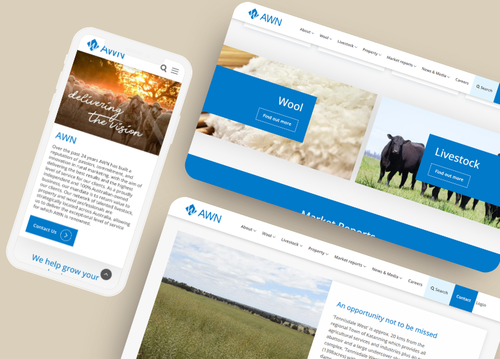
Australian Wool Network (AWN) shows why "is it clean?" is often the wrong question. Market data outpaced the valuation algorithm every weekend as the market shifted. The challenge was pace: new information arriving faster than the system could absorb it. 

That's a question of shape, not hygiene. In general terms, a vector database stores each record as a list of numbers describing its characteristics. A system can then find the closest comparable records quickly, and add new records as they arrive instead of waiting for a rebuild.
 
For AWN, a vector database now maintains 800+ livestock valuation data points, giving real-time livestock valuation. The design followed how the data behaves and how it gets compared. When the problem is pace, a tidier spreadsheet doesn't close the gap.
 
The takeaway for your own use case: before asking whether the data is tidy, ask how it arrives and how fast it changes. Then ask what each new record needs to be compared against. 
 

What drives the effort

This isn't free, and the cost depends on your data more than on the AI. Four things move it most. 

icons-complex-workflow-2

Number of sources

One system with an export is quicker to work with than five that disagree with each other.
icons8-web-accessibility-1

How unstructured it is

Tables are quicker than emails, PDFs and scanned forms, which need extracting before they're useful.
icons8-stack-of-paper

Sensitivity and storage

Personal, health or financial data adds access controls, audit trails and residency decisions. Each one takes design time.
icons-health-insurance

Whether outcomes were recorded

If past decisions were never captured, someone has to label a sample or capture new ones. That's expert time, not engineering time.
 

How we approach it

cloud-1

NEXUS Foundation

One fixed-scope 8-week proof of concept, and the Data & Readiness Assessment is one of its deliverables. It tests the data behind the use case you've chosen, not your whole estate, against questions like the three above.
 
You get a plain view of what passes, what fails, and what it would take to close each gap. Consent and residency questions surface while they're still cheap to answer.
 
It sits alongside the Working AI Solution and the Production Roadmap, so the readiness findings shape what gets built next.
 

Check your own data

Answer these three questions for your top use case:
 
  1. Could you get a sample of the data within a week?
  2. Does it record what was decided, not just what came in?
  3. Would you let a capable new hire make the decision using only that data?


Three yes answers and none of the blockers above means your data is closer to ready than "next year" suggests.

If you'd like a straight answer on whether your data can support your top use case, book a call. We'll tell you honestly whether it's worth pursuing, and what we'd drop. 

Frequently Asked Questions

What is a data readiness assessment for AI?

A data readiness assessment checks whether the data behind one specific AI use case can support it. It asks whether you can get to the data, whether it records the decision you want help with, and whether you'd trust a capable person to decide using it. The result is a list of what passes, what fails and what each gap would take to close.

Our data is messy. Can we still use AI?

In most cases, yes. Current AI models handle inconsistent names, free-text notes and odd formats far better than most reporting tools, so messiness alone rarely blocks a first use case. The more common gap is that nobody recorded the outcome, so there is no history of what a good decision looked like.

How do we prepare data for AI?

Start with one use case, not your whole data estate. Get access to the one or two sources it needs, make sure past decisions are recorded alongside their inputs, and write down the known gaps. Fix problems at the source rather than in a separate cleanup project.

How long does it take to get data ready for AI?

It depends on which test the data fails. An access gap often closes in a week or two with a read-only export, while adding a reason field or labelling past cases takes a few weeks. If the decision has never been captured at all, expect around a quarter of recording before there is anything to learn from.

What drives the cost of preparing data for AI?

Mostly the data, not the AI. The main drivers are the number of source systems, how much sits in emails, PDFs or scanned forms, how sensitive it is, and whether past decisions were recorded. Sensitive data adds access controls, audit trails and residency decisions, and each takes design time.

Do we need a data warehouse before we start with AI?

Usually not. For a first use case, a reliable export from one or two systems is often enough. Build the warehouse once the second and third use cases show you what it needs to hold.

Can we use AI with sensitive data?

Often yes, with care. Check that the use fits the purpose the data was collected for, and get consent where it doesn't. Keep sensitive information out of public AI tools and limit who can see it.

Can we train AI on customer data we already hold?

Only if the new use fits the purpose the data was collected for, or you have consent. The OAIC says that fit is often hard to establish for AI training, and that even de-identifying personal information counts as a use. Where it's unclear, seek consent or offer a meaningful opt-out.

Does it matter where our data is stored?

Yes, especially in health and finance. Know which country the AI service stores and processes data in, who can access it, and what your contracts and regulators require. Settle this before the build starts, not after.


Topics:

Want a second opinion before you decide?

Book a free 30-minute Fit Call. Whether it’s an AI idea, a new build or a system that’s slowing down, we’ll tell you what’s worth doing, what we’d drop, and whether we’re the right fit at all. No commitment. No pitch deck.