

27 Apr 2026
Author
Akash Shakya


Most digital products don't fail because of bad ideas. They fail because of how they're built — wrong problem, brittle infrastructure, architecture that can't scale, delivery without structure, code that becomes a liability, teams that fragment mid-stream. Built to Last™ is the framework EB Pearls built to fix all six of these failure modes before they happen.
Why So Many Digital Products Fail
After 20+ years and more than 900 software projects, EB Pearls identified a consistent pattern: the root causes of failure aren't technical. They're methodological. The same six failure modes appear across almost every troubled project — regardless of industry, budget, or team size.
McKinsey research finds that large software projects run an average of 45% over budget and 7% over time, while delivering 56% less value than predicted. The Standish Group's CHAOS Report has consistently found fewer than a third of software projects complete on time and on budget. These aren't outliers — they're the norm, and they trace back to the same root causes every time.
"Most digital products don't fail because of bad code. They fail before a single line is written — because the problem wasn't defined, the architecture wasn't considered, or the scope wasn't locked."
What Is Built to Last™?
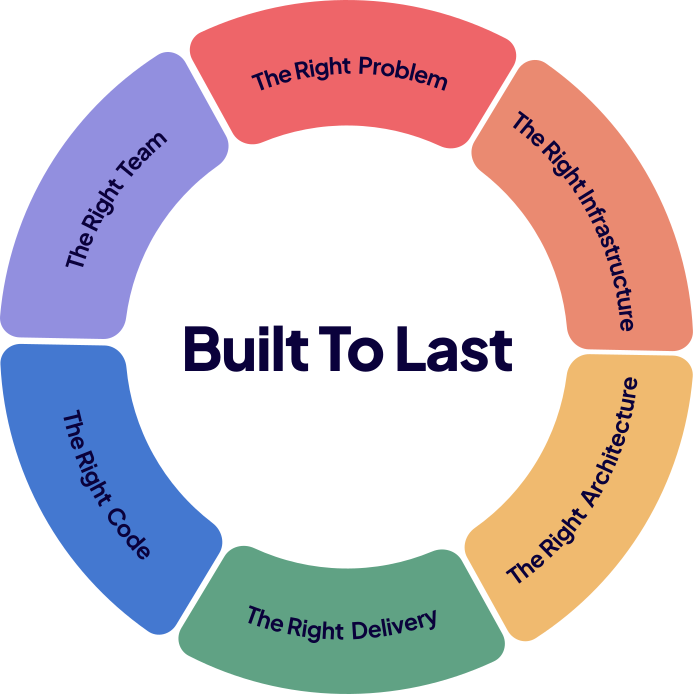
Built to Last™ is EB Pearls' proprietary six-pillar product development framework. It applies to every engagement — from a seed-stage startup building their first MVP to an enterprise modernising a legacy platform. It isn't a premium tier or an optional upgrade. It's the method by which every product is built.
The framework operates across three product maturity stages — MVP, Scale, and Enterprise — and is anchored by three structured workshops and four proprietary documents. Each pillar directly addresses one of the six root causes of product failure.
The 98% on-time delivery rate and 97% client retention aren't marketing claims. They are direct outputs of a framework applied consistently across more than two decades of product work. When the same methodology is applied to every project, outcomes become predictable — not lucky.
The Six Pillars at a Glance
Each pillar maps to a specific decision zone in the product lifecycle. Get any one wrong and the cost compounds downstream. Get all six right and you have the structural conditions for a product that can grow, evolve, and endure.
Pillar One: The Right Problem
The most expensive mistake in product development is solving the wrong problem beautifully. A perfectly engineered product that addresses the wrong user need will fail — and fail expensively. By the time this becomes obvious, six to twelve months of development budget has been spent.
Built to Last™ addresses this before a proposal is written. Every product engagement begins with a Discovery Workshop™ — a structured one-to-two day facilitation process run by senior EB Pearls product strategists. It isn't a sales call and it isn't a briefing session. It's a working session designed to surface the real problem — which is often different from the problem the client first presents.
What happens inside the Discovery Workshop™
- User journey mapping — who uses this, when, why, and what breaks down today
- Assumption inventory — every belief about the market, user, and solution is surfaced and challenged
- Riskiest Assumption Test™ — which assumptions, if wrong, would invalidate the entire concept
- Competitive landscape review — what exists, what's failing, and where the real gap is
- Success definition — what does a successful outcome actually look like in 12 months?
- Scope lock — translating the above into the Locked Scope Document™ and Fixed-Price Proposal
The output isn't a loose requirements document that's reinterpreted differently by the client and the development team. It's a Locked Scope Document™ — a binding artefact both parties have interrogated, challenged, and agreed. Paired with a Fixed-Price Proposal, it removes the two biggest sources of delivery conflict: scope ambiguity and budget surprise.
Central to this pillar is the Riskiest Assumption Test™ — EB Pearls' proprietary method for identifying the assumptions that sit beneath the entire product concept. Not all assumptions carry equal weight. Some, if wrong, mean a minor adjustment. Others, if wrong, mean the product has no market. The RAT™ finds the second category and tests them before architecture is designed, not after launch.
Pillar Two: The Right Infrastructure
Infrastructure is one of the most consequential — and most commonly deferred — decisions in software development. Teams often choose a hosting environment based on familiarity or initial cost, then discover 18 months later that it can't support the load, the compliance requirements, the geography, or the integrations the business now needs.
Built to Last™ makes infrastructure a first-class decision before architecture begins. This means selecting from a mature ecosystem of providers — AWS, Azure, Google App Engine, Supabase, Firebase — based on specific product requirements, not habit. Each infrastructure recommendation is documented and justified before a line of architecture is drawn.
Infrastructure decisions made at this stage
- Cloud provider selection based on compliance, latency, and cost profile
- Deployment strategy — containerised, serverless, or traditional server architecture
- CI/CD pipeline design — automated testing, staging environments,deployment automation
- Monitoring and observability — what gets measured and how issues are caught before users notice
- Backup, disaster recovery, and rollback strategy
- Data residency and compliance requirements (SOC 2, ISO 27001, GDPR, Australian Privacy Act)
EB Pearls holds ISO 27001 certification — the international standard for information security management. This isn't a marketing badge. It means the team is operating to a defined security framework on every project, which directly benefits clients whose products handle sensitive user data.
Pillar Three: The Right Architecture
Architecture is the decision everything else is built on. A well-designed system can absorb growth, new features, and changing requirements without requiring a rewrite. A poorly designed one forces teams into increasingly painful workarounds until the cost of adding a feature exceeds the value it delivers — and the business faces an expensive modernisation project.
The Product Architecture Session™ is the structured process EB Pearls uses to get this right. It's a working session involving senior engineers, the product lead, and the client — focused on defining the system's core components, their relationships, and their scaling characteristics before a single line of code is written.
What the Product Architecture Session™ produces
- Component diagram — what the system is made of and how the parts communicate
- Data model — how information is structured, stored, and accessed at current and projected scale
- API contract — how the frontend, backend, and third-party services interact
- Scaling strategy — what happens when load increases 10×, 100×
- Trade-off register — explicit documentation of where simplicity was chosen over capability, and why
- Production Readiness Score™ — the proprietary assessment of how prepared the system is for real-world use
The Production Readiness Score™ is a forcing function for honest conversations about trade-offs. Every system makes trade-offs — but at most agencies, those trade-offs are implicit and undocumented. The PRS™ makes them explicit before development begins, so both parties know what they're building toward and what they're deferring.
A key architectural principle at EB Pearls: design for the next stage, not just the current one. An MVP doesn't need enterprise-grade complexity — but it must never be architected in a way that makes scaling to enterprise impossible without starting over. Pillar Three holds this tension deliberately.
Pillar Four: The Right Delivery
Delivery is where most methodologies fall apart in practice. Agile, applied loosely, often becomes a mechanism for perpetual scope creep — every sprint adds something, nothing is ever truly complete. Waterfall creates false certainty that collapses the moment a requirement changes. Neither serves the client well, and neither produces the 98% on-time delivery rate that Built to Last™ does.
Pillar Four is underpinned by two documents produced in Pillar One: the Locked Scope Document™ and the Fixed-Price Proposal. These aren't administrative formalities — they are the structural mechanism that makes predictable delivery possible.
How Built to Last™ delivery works operationally
- Milestone architecture — the project is divided into specific, measurable milestones with defined deliverables
- Sign-off gates — each milestone must be formally signed off before the next begins; no ambiguous handovers
- Change control process — any scope change goes through a formal process; nothing is absorbed silently and billed later
- Weekly reporting cadence — clients receive structured progress updates, not just verbal assurances
- Risk escalation protocol — risks are surfaced early with proposed resolutions, not discovered at deadline
- Post-launch support definition — what happens after go-live is agreed before development begins
The 98% on-time delivery rate across EB Pearls' last 12 years of projects is not a function of luck or exceptional circumstances. It is the direct output of Pillar Four applied consistently. When scope is locked, pricing is fixed, milestones are structured, and change control is enforced, on-time delivery becomes a predictable outcome rather than an aspiration.
Pillar Five: The Right Code
Code quality isn't a soft concern — it's a hard business one. Technical debt accumulates silently, compounding until the cost to add a feature or fix a bug becomes so high that the product effectively stalls. Teams then face a choice: absorb the debt tax indefinitely, or pay for a rewrite. Either option is expensive. Both were avoidable.
Built to Last™ treats code as a long-term business asset — like any asset, it can appreciate or depreciate. The practices that make it appreciate are non-negotiable at EB Pearls: clean internal architecture, comprehensive test coverage, thorough inline documentation, and AI-native development practices that raise quality rather than cut corners.
What "right code" looks like in practice
- Clean architecture within the codebase — separation of concerns, no spaghetti logic
- Automated test coverage — unit, integration, and end-to-end tests for critical paths
- Code review protocol — every pull request reviewed before merge; no self-merging
- Inline documentation — code is written to be understood by a developer who wasn't in the original planning sessions
- AI-native development — 360+ AI-native developers using AI as a quality multiplier, not a shortcut
- Full IP transfer — all code, assets, and documentation belong to the client; no lock-in
The full IP transfer commitment matters more than most clients initially realise. Agencies that retain ownership of frameworks, components, or "proprietary technology" are creating a dependency that limits the client's future options. Built to Last™ requires that everything produced belongs entirely to the business that commissioned it — no exceptions, no licensing arrangements, no vendor lock-in.
Pillar Six: The Right Team
Team continuity is one of the least-discussed factors in software quality — and one of the most impactful. Research on knowledge transfer in software development consistently shows that when team members change mid-project, both velocity and quality decline significantly. Every handover loses context. Every new person added to a late project makes it later. Fred Brooks identified this in 1975; it remains true today.
Built to Last™ mandates same-team continuity from brief to launch. The people who attend the Discovery Workshop™ are the people who write the architecture. The people who write the architecture write the code. The people who write the code handle post-launch support. Not a different team on the same project — the same team, throughout.
What team continuity means operationally
- Named team members confirmed before the project begins — not generic "capacity"
- Same product lead from Discovery Workshop™ through to launch sign-off
- No bench swapping — if a team member must change, the client is informed and the transition is managed
- Knowledge management — decisions, trade-offs, and rationale are documented throughout so no knowledge lives only in someone's head
- Post-launch support by the same team — the people who built it know what can go wrong and where
76% of EB Pearls' project pipeline comes from existing clients and referrals — not new business development. That number is a direct reflection of Pillar Six. Clients who trust the team they worked with return because the team is still there. Relationships compound over years, not just projects.
The Three Stages: MVP → Scale → Enterprise
Built to Last™ applies consistently across the full product lifecycle, but its expression adapts to the maturity of the product. The three stages are not pricing tiers — every product moves through them over time. The framework's role is to ensure that decisions made at MVP don't become blockers at Scale, and that decisions made at Scale don't prevent reaching Enterprise.
The most common cause of expensive platform rebuilds isn't poor code quality at MVP — it's architecture decisions that were never designed to be extended. A startup that builds an MVP on a framework or data model that can't support 100× users will face a rewrite between Stage 1 and Stage 2. Built to Last™ eliminates this by making Stage 2 and 3 considerations explicit at Stage 1, before the constraints are locked in.
The Four Anchor Methods
Three structured workshops and one proprietary test serve as the operational backbone of the framework — the moments where the pillars are applied in practice. These aren't optional add-ons. They are the delivery mechanism through which Built to Last™ functions.

Discovery Workshop
A structured one-to-two day facilitation session that surfaces the real problem, validates assumptions, maps user journeys, and defines success. Attended by senior EB Pearls product strategists and the client's key decision-makers. It is the mandatory gate before any product development engagement begins.

Riskiest Assumption Test

Product Architecture Session

Production Readiness Review
What Built to Last™ Looks Like in Practice
The framework isn't abstract. It produces measurable outcomes that trace directly to specific pillar decisions. Here are three examples across different industries. View all client projects →
Plenti · Fintech · Loan origination platform
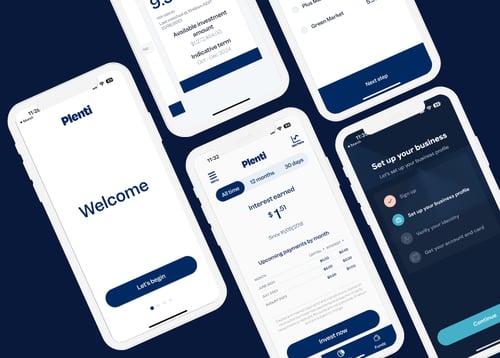
Plenti needed to modernise a loan origination platform that was creating friction for borrowers and bottlenecks for their internal assessment team. The Discovery Workshop revealed the real problem wasn't the borrower-facing application — it was the internal assessment workflow sitting behind it. EB Pearls rebuilt the assessment engine, not just the form.
Result: 40,000+ users served, loan processing 50% faster, and the same team continues to develop the platform as Plenti scales.
Fresh Clinics · HealthTech SaaS · Practitioner platform
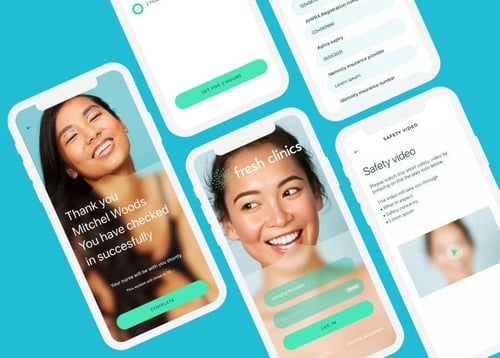
Fresh Clinics is a medical device SaaS platform serving aesthetic practitioners across Australia. The business was growing rapidly and needed architecture that could scale with an expanding network without the platform becoming a liability. The Product Architecture Session produced a system designed for the Scale and Enterprise stages from the start — not retrofitted as the business grew.
Fresh Clinics raised $32M and achieved three consecutive Deloitte Fast 50 rankings. The platform absorbed that growth without a replatform.
EML · Financial services · Claims management
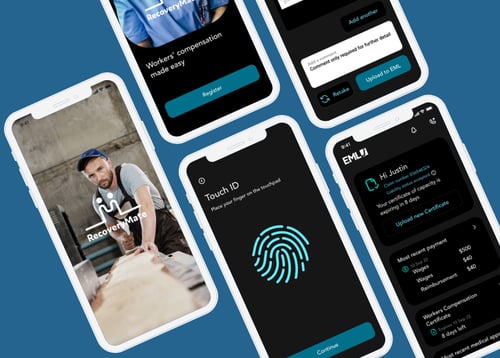
EML needed a claims management platform that could handle 10× peak load while dramatically improving resolution times and reducing operating costs. The right infrastructure, architecture, and code quality decisions produced a system that delivered 65% faster resolution, 40% lower operating costs, and 10× load capacity — all simultaneously.
Is Built to Last™ Right for Your Project?
Built to Last™ is not the right fit for every engagement — and being honest about that is part of how the framework works. Here's a direct assessment.
The honest version: if you want fast-and-cheap with no process, Built to Last™ will feel like friction. That friction is intentional — it's what prevents the problems that show up 12 months later. If you want a product that actually works at scale, still belongs to you, and was delivered on time and budget, the framework exists specifically for that.

Discover app development insights and AI trends with Akash Shakya, COO of EB Pearls. Learn how we build successful digital products.
Read more Articles by this Author