
NEXUS Studio | DDEG: RFP Responses From 3 Weeks to 1 Day
DDEG knew what it needed: a tool that drafts tenders from the building code and its winning bids. It had no software team, and an AI pilot it couldn't trust near a certifier. A NEXUS Studio squad took the tool to production; tenders now take a day, not three weeks.
The question they were asking: How do we get this built and live, safely, without hiring a software team?
-
Client

- Project type Web Application
- Industry Construction & Operation
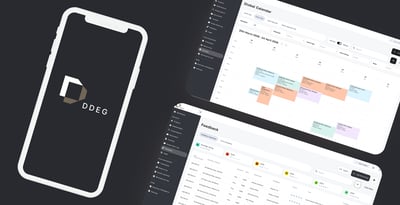
DDEG is a performance-based engineering consultancy: fire safety, accessibility, acoustics and building code advice from eight offices across Australia. Its work sits between architects and builders, the certifiers who approve their designs, and the government and institutional owners who commission them. Every tender answer cites the National Construction Code, so a stale clause is a compliance claim a certifier can reject. And for all its engineers, DDEG had no one who writes software.
They knew what to build. They had no one to build it.
Every tender took around three weeks of a senior engineer's time, mostly spent hunting for answers DDEG had already written. The team knew the fix: one tool that drafts from the current code and its best past bids.
An internal ChatGPT pilot proved the idea in a week, then cited superseded code in its first real draft, with no audit trail and no one accountable for the output. Hiring a software team would take six months before a line of production code, and DDEG would have to run it.
What waiting for a build cost DDEG
Est. 60 hrs / tender
Est. 1 in 3
Est. 6+ months
60 hours × $160 × 40 tenders a year ≈ $384k a year
About $32k for every month the tool wasn't live, before counting the tenders never answered.
How Studio built it, then put it to work
NEXUS stages applied, each run by a Studio component. Delivered using the method now productised as NEXUS Studio.
Discover
Traced one live tender end to end, then fixed the product, squad, monthly fee and what "live" means before any build.
NEXUS: Fixed Envelope
Design
Six questions answered. The big call: retrieval over generation, so every answer traces to the NCC and Australian Standard Clauses.
NEXUS: Built to Last Blueprint
Deliver
A dedicated squad ran inside DDEG's team. AI agents coded each ticket, engineers reviewed every change, and working software landed.
NEXUS: ADLC · Bi-weekly Live Build
Operate
DDEG's team runs it on every tender, with the playbooks to own it. The first month of Sustain watched it in live use.
NEXUS: Production Crossing · Independence Kit
The governed path caught it before a consultant did
In the fifth fortnightly build, drafts for an aged-care tender cited fire-separation clauses from NCC 2019, lifted from an older project. The code-edition test in the ADLC's QA step failed the build before it reached production, and the Delivery Trail showed DDEG exactly why. Engineers added an edition filter: any clause the engine can't match to the current code now goes to a DDEG engineer, not into the draft.
"A fast answer that cites last edition's code is worse than a slow one."
— Delivery Lead, EB Pearls
AI agents built it. Engineers decided.
Only answers an engineer would sign today
The engine never prices a bid
One path to production, two approvals
Yes, because no agent can ship it.
The results, against DDEG's baseline
| Metric | Before | After · EB Pearls |
|---|---|---|
| Time to production | est. 6+ months to hire a team |
12 weeksEnvelope signed to Production Crossing
|
| RFP Response time | 3 weeks |
1 dayTender release to submission-ready draft
|
| Tenders answered | est. 40 a year |
+50%bid register
|
| Business translation | 52 engineer hours saved per tender |
$333k a year52 hrs × $160 × 40 tenders, at the old volume
|
Same tender. Different fortnight.
A fire engineer clears three weeks between client jobs, digs through old projects on the shared drive, and re-checks every clause against the current code by hand.
By the end of the day the engine has drafted it from the code, project data and DDEG's best past answers. The engineer checks the flagged clauses, adds judgement, and is back on client work tomorrow.
And DDEG kept building. It kept the same squad for a second release, expressions of interest and capability statements, then moved the product to NEXUS Sustain, where each new NCC edition is loaded the month it's adopted.
Know exactly what you need to build, but not who will build it safely without hiring a software team?
Tell us about your app. We'll take it from there.
What to expect
-
1
Share a few details
Complete the form with your contact details and what you need help with. -
2
Book your free discovery call
Once you submit the form, choose a time that suits you for your discovery call. -
3
Privacy comes first
Sign an optional NDA to ensure the highest privacy level and protection of your idea. -
4
Discovery call
We’ll discuss your goals, the support you need and answer your questions. If we’re a good fit, we’ll outline the next steps.
What to expect
-
1
Share a few details
Complete the form with your contact details and what you need help with. -
2
Book your free discovery call
Once you submit the form, choose a time that suits you for your discovery call. -
3
Privacy comes first
Sign an optional NDA to ensure the highest privacy level and protection of your idea. -
4
Discovery call
We’ll discuss your goals, the support you need and answer your questions. If we’re a good fit, we’ll outline the next steps.