
Parents and carers needed a consistent way to guide daily activities, without relying on memory, paper schedules, or constant supervision.
-
Client

- Project type Mobile App
- Industry Education & Healthtech
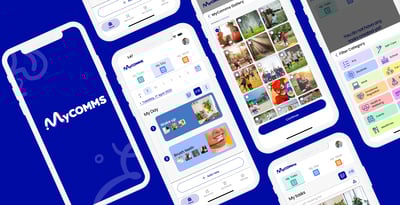


They almost didn't go ahead
The need for a better system was obvious, but building it required careful consideration. This wasn’t a typical productivity app. It had to perform reliably in complex, real-world warehouse environments, where clarity, consistency, and dependable workflows were essential to daily operations and long-term adoption.
-
What if the app becomes overwhelming for parents to set up?
-
What if it doesn’t work the same way across different carers?
-
What if the structure we introduce doesn’t match how routines actually happen?
- What if the workflow feels disconnected from how the work actually gets done?
The focus shifted from building features to reducing friction. Every decision had to answer one question: Does this make the routine easier to create, follow, or repeat? If the answer was no, it simply didn’t belong anywhere in the experience we were designing each single time.
Built around the customer, not the software
The product was structured around predictability.
Every feature needed to reinforce a consistent way of creating and following routines.

Task Creation with Detailed Step Breakdown
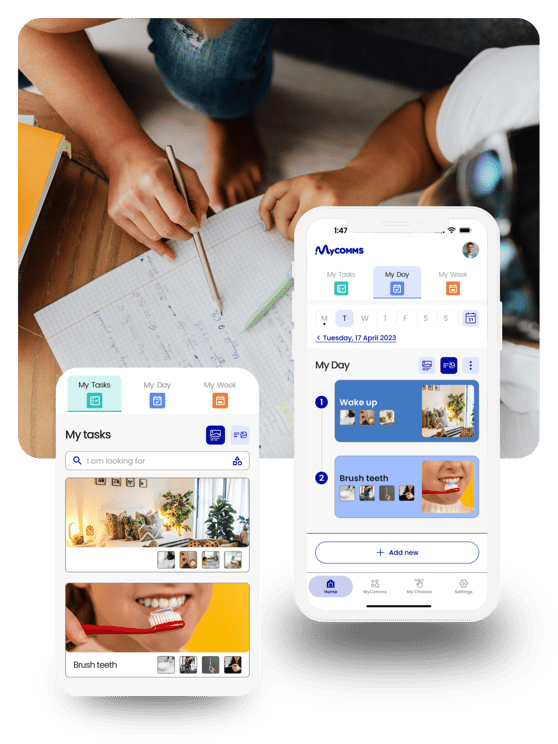
Users can create tasks with numbered steps, combining text descriptions, photos, categories, and visual timers to match real-world routines.

Pre-Built and Customisable Templates
Common routines can be saved as templates, allowing users to reuse structured tasks without rebuilding them each time.

Integrated Visual Gallery
An in-app gallery and device integration allow users to attach meaningful visuals to each step, improving recognition and engagement.

Daily and Weekly Scheduling System
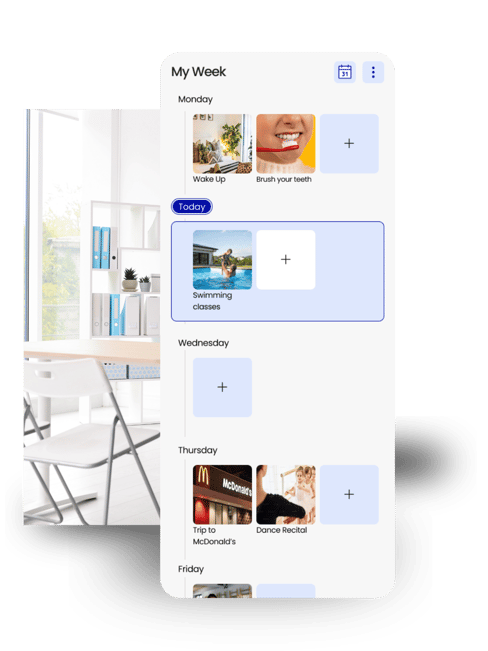
Tasks can be organised into clear daily agendas or weekly calendars, with the current day highlighted for quick reference.

Creation Mode and Play Mode
Creation Mode, secured with a four-digit PIN, allows full control over content. Play Mode removes editing options and lets users swipe through steps and mark them as completed.

Multi-User Collaboration Environment
Multiple users can operate under one account, enabling parents, carers, and professionals to coordinate schedules and track progress together.
Three moments that built trust

They found a problem we didn't know we had
Every decision was explained before it was made

We saw our own routines in the prototype
Three weeks in, we saw real morning routines, therapy sessions, and school-prep workflows reflected in a working prototype. That was the moment the team stopped wondering if it was going to work and started planning for when it launched.
Technology used
 Flutter
 NodeJS
.svg) ReactJS
ReactJS
 MongoDB
 Flutter Bloc
 GraphQL
 AWS lambda
 NextJS
 SonarQube
Technology stopped being the constraint; it became the engine.
"Every morning started with the same explanations."
"She opens the app herself now. I just make the coffee."
The most noticeable shift was the reduction in constant supervision.
Tasks no longer depended on repeated instructions. Each step carried enough context to be followed independently, supported by visuals and clear sequencing.
Consistency also improved across environments. Whether at home, school, or therapy, the same routine could be followed in the same way.
With a structured foundation, MyComms can expand without increasing complexity.

Tell us about your app. We'll take it from there.

What to expect
-
1
Share a few details
Complete the form with your contact details and what you need help with. -
2
Book your free discovery call
Once you submit the form, choose a time that suits you for your discovery call. -
3
Privacy comes first
Sign an optional NDA to ensure the highest privacy level and protection of your idea. -
4
Discovery call
We’ll discuss your goals, the support you need and answer your questions. If we’re a good fit, we’ll outline the next steps.
What to expect
-
1
Share a few details
Complete the form with your contact details and what you need help with. -
2
Book your free discovery call
Once you submit the form, choose a time that suits you for your discovery call. -
3
Privacy comes first
Sign an optional NDA to ensure the highest privacy level and protection of your idea. -
4
Discovery call
We’ll discuss your goals, the support you need and answer your questions. If we’re a good fit, we’ll outline the next steps.