
Customers were dropping off, reviews were slipping, and the app had stopped delivering value. Rebuilding it meant restoring trust—one interaction at a time.
-
Client

- Project type Mobile App
- Industry Telecommunications
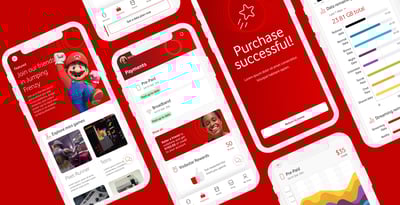


The decision to rebuild wasn’t straightforward.
The risk wasn’t just rebuilding. The bigger risk was continuing with a product that customers were already abandoning.
- Will we find an agency that can handle a project of this size and address all our concerns?
- With such a complex project, this could easily run overtime and over budget.
- We’ve already invested heavily in the current app—what if this fails again?
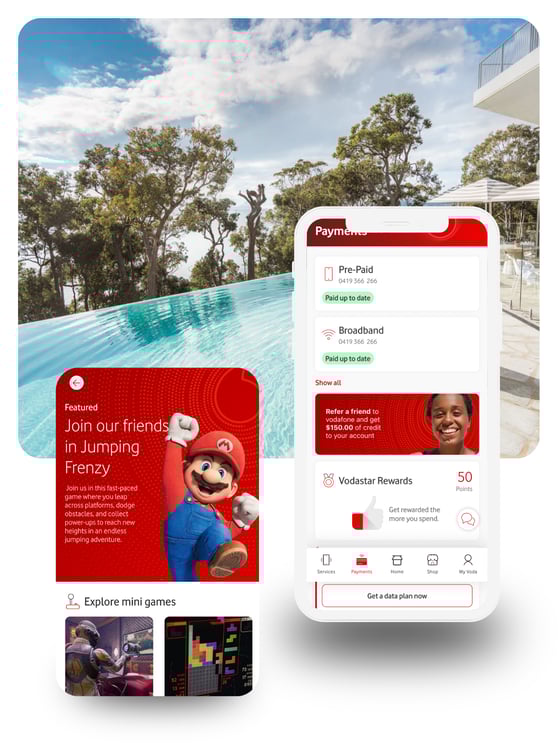
Three moments that built trust

Seeing Through the Customer's Eyes

No Surprises Along the Way

Business and Product in Sync
Every feature shipped connected back to a retention, engagement, or conversion metric and the analytics layer was built from day one to prove it. By launch, we weren't guessing whether the rebuild had worked. We could see it.
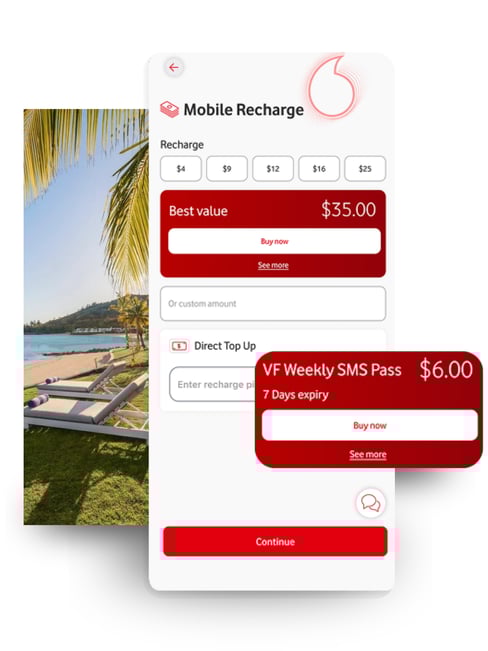
Built around the customer, not the software
The focus shifted from redesigning screens to rebuilding how the entire system worked underneath.

Customer Mobile App (Multi-Type Users)

Unified Journey Architecture

Rewards Program Integration

Payment Functionality

Analytics Layer

Data Connection Layer

What stood out straight away was how clear they were on cost. We got a realistic estimate early, understood what was included, and there were no hidden extras later. As part of our research process, we received a few vague quotes from other agencies. When comparing these to EB Pearls’ transparent costing, it was a no-brainer.

What was once a barrier became a reason to stay.
“Our app was almost unusable in today's market.”
"Now its usability sets the benchmark."
Before the rebuild, the app lost users at key moments—payments and rewards felt disconnected, leading to drop-offs.
After launch, those journeys became seamless and predictable. Customers moved effortlessly between actions, while teams gained clearer visibility into user behaviour.
With connected data and flexible architecture, the app is no longer a constraint—it’s a platform the team can continuously evolve, not just maintain.

Tell us about your app. We'll take it from there.

What to expect
-
1
Share a few details
Complete the form with your contact details and what you need help with. -
2
Book your free discovery call
Once you submit the form, choose a time that suits you for your discovery call. -
3
Privacy comes first
Sign an optional NDA to ensure the highest privacy level and protection of your idea. -
4
Discovery call
We’ll discuss your goals, the support you need and answer your questions. If we’re a good fit, we’ll outline the next steps.
What to expect
-
1
Share a few details
Complete the form with your contact details and what you need help with. -
2
Book your free discovery call
Once you submit the form, choose a time that suits you for your discovery call. -
3
Privacy comes first
Sign an optional NDA to ensure the highest privacy level and protection of your idea. -
4
Discovery call
We’ll discuss your goals, the support you need and answer your questions. If we’re a good fit, we’ll outline the next steps.