Most AI partners jump straight to solutions. We start with your situation.

Where you are right now changes everything - your risk, your priorities, and what good actually looks like. Pick your stage below. We'll show you exactly what we'd do and why.

20 years building production software · 50+ AI systems live · ISO 27001 certified

You know AI matters. You just don't want to build the wrong thing first.

You know AI is relevant. You might have tried ChatGPT internally. But you haven't committed to a specific use case, you're not sure which problems are worth solving with AI first, and you don't want to make an expensive mistake by building the wrong thing.

The real question isn't whether AI is right for your business. It's which problem to solve first, in what order, and with what investment — before you commit a dollar to development.

What most teams are worried about at this stage

  • Is generative AI actually right for my business, or is this just hype?
  • How do I identify which use cases would deliver real ROI — not just impressive demos?
  • How do I choose a AI partner without making an expensive mistake?
  • What if we build the wrong thing and have to start again?

What we do for teams at this stage

  • Run a free AI Readiness Session to assess where GenAI can deliver the most value
  • Map your highest-impact use cases with a clear business case for each
  • Give you honest advice on what to build first — and what to leave for later
  • Provide a realistic cost and timeline range before you commit to anything
  • Tell you if AI isn't the right solution — and what might work better
"I knew AI was relevant to our business but had no idea where to start or what was actually feasible. The Discovery Session was the most useful hour I'd spent on this topic. They told us which ideas had legs and which ones to park. No hype, no pitch." Sam Khalef, MyBos

You know what you want to build. You need a team that will still be accountable six months after launch.

You've identified a specific problem you want to solve with AI. You've done some research. Maybe you've had a proof-of-concept built. What you need now is a team that will get it right in production — not just in a demo.

Your biggest concern right now: building something that actually works when real users depend on it. Not something that looks impressive in a pitch and falls apart under real-world conditions.

What most teams worry about at this stage

  • How do I avoid building something that works in a demo but fails in production?
  • What does it actually cost, and are there hidden expenses I haven't accounted for?
  • Will the AI be accurate enough that we can actually rely on it?
  • How do I define "good" before the build — so I know if we've succeeded?

What we do for teams ready to build

  • Review your use case and flag any architecture or data risks before the build begins
  • Define accuracy benchmarks and success criteria before a model is selected
  • Build in clear stages with regular demos — you always know what's happening
  • Test accuracy and fallback behaviour rigorously before production deployment
  • Set up cost monitoring and alerting from day one — no infrastructure bill surprises
"We had a clear use case but no idea how to scope it technically. EB Pearls helped us define what 'good' looked like before we started, not after. That single decision changed the outcome of the project." Christiaan Lok, Rello Pay

Your AI is live. But something's not right — and it's getting worse.

The AI launched. At first it seemed fine. But now accuracy is drifting, costs are creeping, or performance is degrading as usage grows. You're not sure whether the problem is the model, the data, or the architecture — and your team doesn't have the bandwidth to find out. You need someone to diagnose what's actually wrong before committing to a fix that might make things worse.

What most teams worry about at this stage

  • Why is the AI drifting? It was accurate at launch but results have degraded.
  • Costs are scaling faster than usage — how do we bring them under control?
  • Do we need to rebuild, or can we fix what we have?
  • How do I explain to the board why we're spending more to fix something we already paid for?

What we do for teams in this situation

  • Start with a free audit of what you have — accuracy, cost, latency, architecture risk
  • Identify exactly what's wrong before recommending any fix
  • Implement model retraining, cost optimisation, and drift detection
  • Stabilise the system so your team stops firefighting and starts planning
  • Give you a concrete plan with honest cost and timeline — no open-ended engagements
"Our AI was costing three times what we budgeted within six weeks of launch. EB Pearls found the issue — a single inefficient query pattern multiplying across millions of API calls. Costs dropped 40% and the system has been stable ever since." Chris Ferris, Coposit

Your AI works. Now the question is how much of your business it can run without creating new risk.

The product is working. Now the question is how do you use AI to run the business smarter — not just the product. You're looking at workflows with high manual volume and wondering if AI can take them over without creating compliance, reliability, or oversight risk.

Your concerns aren't just technical — they're commercial, legal, and reputational. You need clear accountability at every automated decision, audit trails for governance, and a team that understands regulated environments.

What enterprise teams worry about at this stage

  • Can we introduce agentic AI without creating compliance or reliability risk?
  • How do we automate workflows without disrupting operations that already work?
  • How do we prove the automation ROI justifies the investment to our board?
  • What happens when the AI makes a wrong decision — who is accountable?

What we provide for enterprise automation

  • Map your workflows and identify the most impactful automation opportunities
  • Design agentic AI with defined decision boundaries and human override at every critical point
  • Full audit trails for regulated industries — healthcare, finance, legal, government
  • Implement automation in stages so your team adapts alongside it
  • Define and track ROI metrics from the first sprint, not after launch
"We wanted to automate our claims triage but had real concerns about compliance and oversight. EB Pearls designed a system with clear human escalation points and a full audit trail. We cut resolution time by 65% and passed every compliance review." Matthew Baker, EML

The real reasons AI projects fail in production

These aren't technical problems. They're business problems that happen to have a technical cause. After 50+ AI projects, we've seen every one of these patterns — and we know exactly how to prevent them.

Built to demo, not true to scale

Models that perform in tests often fail in real use, where inputs are messy and unpredictable. A $35k build that needs $180k to fix later isn’t a bargain.

How we prevent it:
Production architecture is the starting assumption, not the upgrade.

No accuracy standards before build

When accuracy standards aren't defined before build, teams discover what "good" looks like in production. 4 weeks of emergency rework followed.

How we prevent it:
Accuracy benchmarks & hallucination thresholds agreed before model selection.

Infrastructure costs spiral undetected

 A single inefficient query pattern can multiply across millions of API calls. A simple monitoring alert would have caught it on day two.

How we prevent it:
Cost monitoring and alerting configured before your first user arrives.

Model drift goes undetected for months

Model drift is invisible without monitoring. Users had quietly stopped trusting the AI and were manually overriding it.

How we prevent it:
Drift detection and model monitoring standard across every deployment.

Data architecture built for demos, not compliance

Many AI builds treat data as an afterthought. Sensitive data sent to third-party models, no data sovereignty controls, and audit trail review.

How we prevent it:
Data architecture, sovereignty, and privacy controls designed in Week 1.

The vendor disappears post-launch

Many AI vendors complete the build and move on, leaving behind a system the client doesn't have the expertise to maintain. 

How we prevent it:
Post-launch support agreed before build begins. Full documentation. Same team.

Most AI systems are built to demo. Ours are Built to Last™.

After 50+ generative AI systems in production, we've identified the same pattern: the failures that show up six months after launch almost always trace back to decisions made in the first two weeks.

Launch

Build It Right


Ship with foundations that hold under real-world conditions.

  • Architecture designed for production load, not demo traffic
  • Accuracy benchmarks defined before a model is selected
  • Security, compliance and fallback behaviour built in from day one
  • Tested against edge cases before real users see it
Scale

Grow Without Breaking

Your AI should handle growth with confidence, not strain under it.

  • Cost monitoring that alerts before bills spiral
  • Drift detection so accuracy degradation is caught early
  • New capabilities added without destabilising what already works
  • Real visibility into what's happening inside your system
Evolve

Stay Ahead


The model landscape changes. Your business changes. Your AI needs to keep up.

  • Model upgrades evaluated and implemented without downtime
  • Automation expanded only where it genuinely reduces risk
  • Audit trails and governance updated as regulations evolve
  • Continuous improvement without a full rebuild

You can start at any stage.  Whether you're building from scratch, stabilising a live system, or expanding into enterprise automation, the Built to Last™ system gives you a clear path forward that doesn't require a rebuild six months later.

Book Your Free Discovery Session

Real AI. Real systems. Real results.

Every project below is live in production - not a pilot, not a proof of concept. These are AI systems that real businesses depend on every day.
AWN-logo-wool-livestock-property-realestate-rural-ag

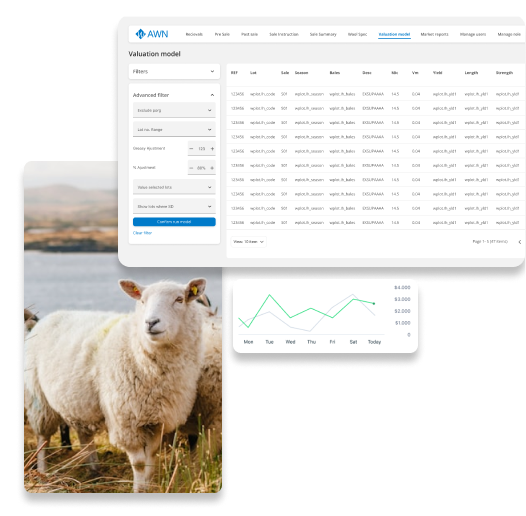
AWN: AI-powered wool valuation delivering 94% accuracy and 60% faster appraisals

We built a predictive analytics system for AWN trained on auction data, fibre measurements, and market indices. The result: 94% valuation accuracy, 60% faster appraisals, and zero peak-season bottlenecks.

Read more about AWN
AWN-1
eml-300x127-1

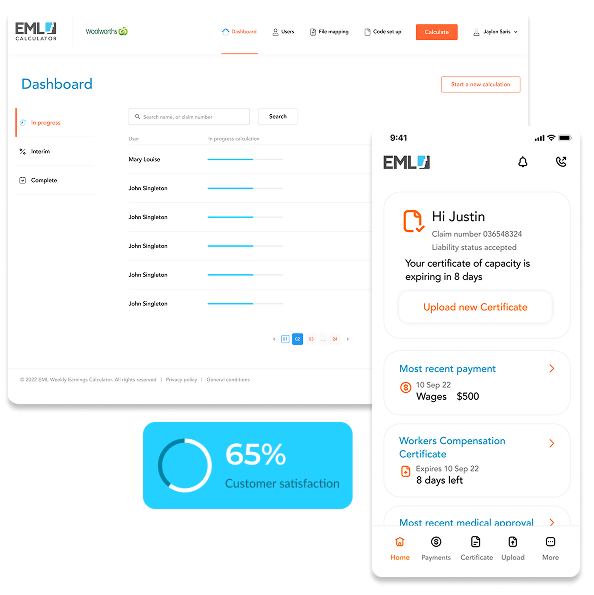
EML: AI claims triage that cut resolution time by 65% — with full compliance

We rebuilt EML's claims triage from the ground up. The result: 65% faster resolution, 40% reduction in manual processing cost, and a system that passed every compliance review at launch.

Read more about EML
EML-2
Artis-Logo

Artis: AI platform rebuilt to be 80% more scalable

We built full AI engine and data pipeline rebuild. Smarter model architecture, scalable infrastructure, and performance monitoring. Zero downtime migration to the new system.

Read more about Artis
Artis

After 50+ AI systems in production, these are the AI capabilities we know how to build.

Every capability below has been scoped, built, and delivered in production — not demonstrated in a sandbox.

robot-1

Intelligent Assistants & Chatbots

AI that understands context, handles complex queries, and knows when to escalate to a human.

android-logo

Document Intelligence

Extract, classify, summarise and act on information from unstructured documents at scale.

google-chrome-logo

Workflow Automation & Agentic Systems

Multi-step workflows with defined decision boundaries, human override points, and full audit trails.

figma-logo

Predictive Analytics & Engines

Models that learn from your data to forecast demand, personalise experiences, or surface the next best action.

head-circuit

RAG & Enterprise Knowledge Systems

Connect AI to your internal knowledge base, documentation, or data warehouse. Accurate retrieval, source attribution, and hallucination controls.

cloud

Cloud Infrastructure & MLOps

The architecture that keeps AI running reliably in production. Deployment pipelines, cost monitoring, drift detection, and 99.9% uptime SLA.

check-circle

AI Integration & API Layer

Connect AI capabilities to your existing systems — CRM, ERP, support platforms, data pipelines. No rip-and-replace. Built to work alongside what you already have.

watch

Compliance-Ready AI for Various Industries

Healthcare, finance, legal, and government-ready AI with audit trails, data sovereignty controls, and human escalation at every critical decision point.

bank

Fintech & Financial Services

Lending automation, fraud detection, claims triage and customer intelligence. Built with audit trails and regulatory compliance.

hospital

Health & Healthcare Technology

Patient triage, administrative automation, and diagnostic support tools. Privacy-first architecture with human oversight.

house-line

Insurance

Claims processing automation, compliance monitoring, underwriting support, and customer communication AI. Full audit trails for every automated decision.

buildings

Education & Edtech

Personalised learning tools, administrative automation, student support systems, and content intelligence. Built for institutional scale.

shopping-cart

Retail & eCommerce

Recommendation engines, demand forecasting, and inventory intelligence. Built to handle real transaction volume.

video-camera

Telecommunications

Customer engagement automation, network intelligence, churn prediction, and support AI. Built for high-volume, always-on environments.

student

Government & Public Sector

Compliance-first AI with full data sovereignty, audit trails, and human oversight. Built to meet Australian government data requirements.

package

SaaS & Technology

AI features embedded into existing products — recommendation engines, intelligent search, automation layers, and predictive analytics.

rocket-launch

Production-First Architecture

Every system is designed for real-world load from day one — not retrofitted after launch.

Plenti's lending platform scaled to 40,000+ users without a single architecture rebuild.

kanban

Accuracy Benchmarking

Accuracy thresholds agreed upfront, not discovered post-launch.


EML's claims triage system passed every compliance review at launch.

files

Staged Build with Regular Demos

We build in clear stages with working demos at every milestone.


Two-week sprints with a working demo at the end of each. No client has ever been surprised at handover.

check-circle

Drift Detection & Monitoring

We build drift detection and cost alerting into every system from sprint one.

One SaaS client's costs dropped 40% after monitoring identified a single inefficient query pattern.

shield-check

Human Override by Design

Every automated decision with commercial, legal, or reputational risk has a defined human escalation point.

EML's claims automation cut resolution time 65% with full compliance maintained.

repeat

Compliance & Audit Trail Architecture

Audit trails, data sovereignty controls, and governance frameworks designed in from sprint one — not bolted on after a compliance review.

Every system delivered into healthcare, insurance, and finance has passed its first compliance review.

seal-check

Honest Cost Scoping


We scope and cost every engagement before you commit. No open-ended retainers, no hidden infrastructure costs.


Fixed-scope, fixed-cost proposals before signing anything. Total infrastructure costs priced upfront.

headset

Post-Launch Accountability

Ongoing monitoring, model maintenance, and performance accountability agreed before the build begins.


Pymble Ladies' College — 30% admin reduction sustained across 1,600+ users, not just at go-live.

icons-card-payment

Foundation Models

OpenAI GPT-4o
Claude (Anthropic)
Gemini (Google)
Llama (Meta)
Mistral

icons-trello

AI Orchestration & Agents

LangChain
LlamaIndex
AutoGen
CrewAI
Custom agentic frameworks

icon-recruitment4

RAG & Vector Infrastructure

Pinecone
Weaviate
pgvector
Chroma
Qdrant

icon_interoperability

Cloud Infrastructure

AWS
Google Cloud
Azure
Vercel
Railway

icons-blockchain

MLOps & Model Management

MLflow
Weights & Biases
SageMaker
Vertex AI

database

Data & Integration Layer

Snowflake
BigQuery
dbt
Kafka
REST & GraphQL APIs

icons-salesforce

Model Deployment & Management

Amazon SageMaker
Bedrock Model Management
MLflow

icons-google-code

AI Development & Coding

Amazon CodeWhisperer
OpenCode
GitHub Copilot Enterprise

From the first conversation to production AI, what happens at every step

No surprises. No mystery. Here's exactly what the process looks like, including how long each stage takes and what you get at the end of it.
Tiffany and Binisha in Office
  1. icons-search-for-love-1 AI Validation 30 minutes. Free
    A senior AI strategist reviews your situation before the call. In 30 minutes you'll know whether AI is right for your use case, which use case to build first, what it will realistically cost, and what the three biggest risks are. NDA signed before any detailed discussion
  2. icons8-physics Proof of Capability 1-2 weeks. From $5K
    We build a working prototype against your actual data. Not a mockup. A real AI system producing real responses so you can see actual behaviour, including edge cases and failure modes before committing to a full build.
  3. icons-health-insurance Scoping & Agreement 1-2 weeks. From $3K
    Technical specification, integration map, cost model, and delivery plan all documented and agreed before development begins. No scope that silently expands. What we scope is what you pay.
  4. icons8-stack-of-paper-1 Build 8-16 weeks. From $50K
    Two-week sprints. Working AI at the end of every cycle, actual deployable software you can test and give feedback on. Cost monitoring running from sprint one.
  5. icons-real-estate Evolve Ongoing. From $800
    Your AI is watched continuously after launch. Drift detected before users notice. Costs monitored before they spiral. Model retrained as your data evolves. New capabilities added when they genuinely help.

    We're a long-term partner, not a team that ships and disappears.
  6. Book Your Free AI Discovery Session

In-house team, AI platform tool, offshore vendor,or specialist partner — what's right for you?

There's no single right answer. Each option has genuine trade-offs.
Here's an honest picture of what each looks like in practice.
In-House Team
AI Platform Tool
Offshore Agency
Generalist Agency
Typical investment
$250k+ per year
$500–$5k/mo
$30k–$150k
$50k–$200k
Production-ready from day one
Depends on hire
Inconsistent
Accuracy benchmarks before build
Depends on hire
Cost monitoring from launch
Depends on hire
Dashboard only
Australian data sovereignty
Post-launch AI monitoring & support
Dashboard only
Post-launch accountability
Ongoing Salary
Best for
Long-term product ownership
Simple, templated use cases
Basic integrations, low complexity
Broad digital + AI work

In-House Team

AI Platform Tool

Offshore Agency

Generalist Agency

RECOMMENDED

EB Pearls

Typical investment
$250k+ per year
Production-ready from day one
Depends on hire
Accuracy benchmarks before build
Depends on hire
Cost monitoring from launch
Depends on hire
Australian data sovereignty
Post-launch AI monitoring & support
Post-launch accountability
Ongoing Salary
Best for
Long-term product ownership
Typical investment
$500–$5k/mo
Production-ready from day one
Accuracy benchmarks before build
Cost monitoring from launch
Dashboard only
Australian data sovereignty
Post-launch AI monitoring & support
Dashboard only
Post-launch accountability
Best for
Simple, templated use cases
Typical investment
$30k–$150k
Production-ready from day one
Accuracy benchmarks before build
Cost monitoring from launch
Australian data sovereignty
Post-launch AI monitoring & support
Post-launch accountability
Best for
Basic integrations, low complexity
Typical investment
$50k–$200k
Production-ready from day one
Inconsistent
Accuracy benchmarks before build
Cost monitoring from launch
Australian data sovereignty
Post-launch AI monitoring & support
Post-launch accountability
Best for
Broad digital + AI work
Typical investment
$30k–$500k+
Production-ready from day one
Proven at 5M+ users
Accuracy benchmarks before build
Always
Cost monitoring from launch
Standard
Australian data sovereignty
ISO 27001
Post-launch AI monitoring & support
Standard
Post-launch accountability
Ongoing optimisation
Best for
Production AI that needs to scale and last

Collecting quotes from AI vendors?

We'll benchmark them for you — no charge.

Bring us what you've been quoted and we'll tell you what's included, what's missing, and whether it's fair.

What our clients have achieved with AI in production

Numbers from live systems — not pilot projects, not projections.

65% Reduction in claims resolution time

AI triage with full compliance and human oversight maintained

40,000+ Users on lending platform

Scaled without a single architecture rebuild after production launch

50% Faster loan processing

AI-powered decisioning reducing manual review time significantly

$200M+ Processed through AI-powered payments platform

Reliable, compliant, and stable in production

30% Reduction in administrative workload

Sustained across 1,600+ users — not just at go-live

150% Increase in customer engagement

AI-powered personalisation across digital channels

40% Reduction in AI infrastructure costs

Single query optimisation identified and fixed post-launch

3× Sales growth in 3 months

AI-powered e-commerce personalisation driving measurable revenue uplift

$9.6B+ Total client revenue delivered

Across 1,400+ businesses over 20 years of engineering excellence

We're the right AI partner for some organisations.Not all of them.

We'd rather be clear up front than waste your time. Here's where we're a strong fit — and where we're probably not.

We’re probably not the right fit when…

Your decision is based only on the lowest quote
You need something built fast, regardless of production quality
You haven't validated the use case and need a faster, lower-risk way to test the idea first
You want a vendor who will simply execute a brief without pushing back

We’re a strong fit when…

You want AI that will still perform reliably in two years — not just at launch
You need a partner who will challenge the brief, not just execute it
You're operating in a regulated environment where compliance isn't optional
You want clear accountability for what gets built and what happens post-launch
You need honest advice on what to build — including being told what not to build

If that sounds like you — let's talk.

72+ industry awards.But that's not why clients choose us.
Awards tell you the work is recognised. Client retention tells you it actually works. Over 60% of our clients have been with us for more than 3 years. Certification and partnership (1)

The Team You'll Actually Work With.

We're proudly Australia's most experienced AI and software engineering team. With 300+ in-house engineers and AI specialists, we've been delivering production-grade systems for founders, scale-ups, and enterprise businesses for 20+ years. The people who lead your AI project have personally shipped production AI systems — not just built demos.
Binisha Sharma

Binisha Sharma

Account Manager
Serving as the lead point of contact for all customer management matters, Binisha focuses on fostering a talented and innovative team of design. She acts as client advocate and works with teams to ensure that client needs are understood and satisfied to help improve the overall customer experience.
Akash Shakya

Akash Shakya

Chief Operating Officer and Co-Founder
Coming from distributed computing background, Akash manages all operations across marketing, sales, project operations, people operations and finance team. He is highly technical yet very business focused and is always driven to create successful business products for our clients.
Michael Signal

Michael Signal

Creative Director
Michael is the creative brains of the company and he leads the UX and UI team at EB Pearls. He has experience of over 15 years in interaction design and has designed digital products for 1200+ companies all over the world.
Rupesh Sharma Rajopadhyaya

Rupesh Sharma Rajopadhyaya

Senior Engineering Manager
With over a decade years of experience at EB Pearls, Rupesh is a seasoned leader in delivering impactful, high-quality products and fostering seamless collaboration. His focus on aligning projects with business goals drives continuous growth and success.
Nikesh Maharjan

Nikesh Maharjan

Senior Engineering Manager
Nikesh leads our technical innovation with vision and precision, helping us exceed client expectations and stay ahead of the tech curve. His leadership empowers the team to embrace future opportunities with confidence and efficiency.
Prasanna Bajracharya

Prasanna Bajracharya

Associate Engineering Manager
Prasanna brings a blend of technical expertise and strategic thinking to our team. He focuses on fostering innovation, mentoring team members, and guiding projects from concept to impact. Known for his collaborative approach and solution-oriented mindset, Prasanna helps team grow smarter, work efficiently, and deliver meaningful results.

Questions We Get Asked Most. Answered Honestly.

Straight answers to the questions we’re asked most often about mobile app development, pricing, process, and what it’s like to work with us.

Generative AI creates new content — text, code, images, structured data — by learning patterns from large datasets. Traditional AI classifies or predicts based on rules you define. The practical difference is significant: traditional AI follows the rules you program; generative AI learns patterns and generalises to new situations it hasn't seen before. In business, generative AI powers conversational assistants, document processing, content generation, code review, and decision support. It doesn't replace traditional machine learning — it expands what's possible. Most enterprise AI systems today use both: traditional ML for structured prediction tasks, generative AI for language, reasoning, and unstructured data.

A standard AI chatbot answers questions. Agentic AI takes action. An agentic system can complete multi-step workflows autonomously — routing a claim, booking an appointment, drafting and sending a communication, updating a database — without a human approving every step. The key architectural difference is that agents have access to tools and can make decisions about which tools to use and in what sequence. For enterprise use, the governance layer is critical: agentic AI must have defined decision boundaries, human escalation checkpoints for high-stakes decisions, full audit trails for every automated action, and rollback mechanisms. EB Pearls builds agentic AI with these governance frameworks as standard — not as an optional add-on.

An LLM (Large Language Model) is the AI model that powers generative AI applications — GPT-4o from OpenAI, Claude from Anthropic, Gemini from Google, Llama from Meta, and models available through AWS Bedrock. The right model for your business depends on four factors: accuracy requirements for your specific use case, cost per query at your expected volume, latency requirements (how fast responses need to be), and compliance requirements (some regulated industries cannot send data to certain third-party APIs). There is no universally best LLM. EB Pearls is model-agnostic — we select the right model for each use case based on these factors, not vendor preference. For regulated Australian industries, we often use AWS Bedrock-hosted models to maintain data sovereignty.

A vector database stores data as mathematical representations (embeddings) that capture semantic meaning rather than exact text. When you search a vector database, you find results that are semantically similar to your query — not just keyword matches. For RAG systems, vector databases are the retrieval layer: they find the most relevant documents from your knowledge base to ground the AI's response. Common vector databases include Pinecone, Weaviate, pgvector (PostgreSQL extension), and Amazon OpenSearch. Whether you need a dedicated vector database or can use pgvector depends on your data volume, query frequency, and latency requirements. EB Pearls advises on the right choice in the architecture phase — before any code is written.

Ongoing AI costs fall into three categories. Infrastructure costs: API call costs (OpenAI, Anthropic, AWS Bedrock charge per token), compute costs for hosting and inference, and storage costs for vector databases and data pipelines. These typically run $500–$5,000 per month for mid-size deployments, scaling with usage volume. Maintenance costs: model retraining when drift is detected, prompt engineering updates as model versions change, and integration maintenance as connected systems evolve. Support costs: monitoring, incident response, and ongoing optimisation. EB Pearls scopes all three cost categories before any build begins — infrastructure costs are estimated based on expected query volume and agreed upfront, not discovered post-launch.

Yes — the majority of AI projects qualify for the Australian Government's R&D Tax Incentive, which returns up to 43.5 cents on every eligible dollar spent for companies with turnover under $20M, or 8.5–16.5 cents for larger companies. To qualify, the work must involve genuine experimental activity to resolve technical uncertainty — which most custom AI development does. Eligible activities include model selection and testing, architecture design, fine-tuning, accuracy benchmarking, and integration development. R&D eligibility should be assessed before the build begins, not after — the way the project is structured and documented affects what's claimable. EB Pearls structures builds to maximise R&D eligibility and provides documentation to support your claim. Speak to your accountant or R&D advisor early in the process.

Ask these ten questions before signing anything. One: Can you name three clients with live AI systems I can reference? Two: What happens when accuracy drifts post-launch — is ongoing monitoring included? Three: Who owns the code, models, and data pipelines at delivery? Four: What's your process for defining accuracy benchmarks before build? Five: How do you handle data sovereignty for Australian compliance requirements? Six: What does your cost monitoring look like — how will I know if infrastructure costs are spiking? Seven: Have you built AI in my industry before? Eight: What does your engagement look like six months after launch? Nine: Will you tell me if AI isn't the right solution for my use case? Ten: Can I see a fixed-scope proposal before I commit? Any agency that struggles to answer these clearly is not the right partner for a production AI system.

Building in-house gives you long-term ownership, institutional knowledge, and control — but requires hiring AI engineers, ML specialists, and DevOps talent in a market where those skills are expensive and scarce. A typical in-house AI team costs $250,000+ per year in salaries before any infrastructure or tooling. An external partner provides faster time to production, broader experience across use cases and industries, and no ongoing headcount cost — but requires careful contract structuring around IP ownership and post-launch accountability. The right answer depends on your timeline, budget, internal capability, and how central AI will be to your product long-term. EB Pearls often works as a build partner that transitions to an advisory and maintenance role once the system is stable — giving clients the best of both models.

Hallucination — AI generating confident but incorrect responses — is a fundamental property of LLMs, not a bug that can be fully eliminated. It can be significantly reduced through architecture and process choices. RAG grounds responses in verified data sources rather than model training, dramatically reducing hallucination on domain-specific queries. Accuracy benchmarks and hallucination thresholds agreed before build ensure everyone knows what acceptable error rates look like. Testing pipelines that specifically probe for hallucination scenarios before deployment catch failure modes before users do. Human-in-the-loop checkpoints for high-stakes decisions mean the AI flags uncertainty rather than generating a confident wrong answer. For regulated industries — healthcare, legal, financial services, government — EB Pearls designs these safeguards into the system architecture, not as afterthoughts.

This is the question most AI vendors don't want to answer, which is exactly why you should ask it. Accountability in AI systems is an architectural and contractual question, not just an ethical one. Architecturally, EB Pearls designs human override points at every automated decision that carries commercial, legal, or reputational risk — so a human is always accountable for high-stakes outcomes. For agentic AI systems, every automated action is logged in a full audit trail that records what the AI decided, why, and what data it used. Contractually, IP ownership of the system, the code, and the decision logic belongs to the client. For regulated industries, EB Pearls works with clients to ensure automated decision documentation meets regulatory requirements — healthcare, insurance, and financial services all have specific obligations around explainability and audit trails.

Data sovereignty means your data stays within Australian borders and is subject to Australian law. For AI systems, this matters when personal information or sensitive business data is processed by AI models — if that processing happens on overseas servers, Australian Privacy Act protections may not apply and foreign governments may have legal access to the data under their own laws. For government, healthcare, and financial services organisations, data sovereignty is often a non-negotiable procurement requirement. EB Pearls builds data-sovereign AI systems using AWS Australian regions (Sydney and Melbourne), AWS Bedrock for model hosting, and on-premises or Australian-hosted vector databases. Data flows are documented in Week 1 so clients can evidence sovereignty compliance to their own regulators and procurement teams.

The Australian AI development market broadly divides into three tiers. Global consultancies (Accenture, Deloitte, PwC) offer AI strategy and implementation but at enterprise rates that exclude most scale-ups and mid-market businesses. Specialist AI startups offer cutting-edge capability in narrow domains but limited production track records and compliance experience. Established software development firms with AI capability — like EB Pearls — offer the combination of production engineering experience, compliance knowledge, and AI capability that most enterprise and mid-market clients need. EB Pearls has been ranked #1 globally by Clutch for app development four consecutive years (2021–2024), has 50+ GenAI systems in production, and is ISO 27001 certified. Relevant selection criteria include production track record, industry compliance experience, data sovereignty capability, and post-launch accountability — not just AI buzzword density.

AI applications in Australian healthcare fall into three categories. Clinical documentation — AI that transcribes, structures, and summarises clinical notes, reducing administrative burden on clinicians. Patient communication and triage — AI that handles routine patient queries, appointment scheduling, and post-discharge follow-up. Administrative automation — processing referrals, prior authorisations, and compliance documentation. The dominant constraint in healthcare AI is privacy: systems must comply with the Privacy Act, My Health Records Act, and relevant state health privacy legislation. Data sovereignty is typically non-negotiable — patient data must stay in Australia. EB Pearls has built AI for NSW Health and Fresh Clinics, with privacy-first architecture and human oversight at every clinical decision point as standard.

Government AI adoption in Australia is accelerating, led by document processing, internal knowledge management, and citizen-facing information systems. The Australian Government's AI Ethics Framework and various state-level guidelines establish principles for government AI: human oversight, accountability, transparency, and privacy by design. Procurement requirements typically include data sovereignty (Australian-hosted infrastructure), Privacy Act compliance, and explainability of automated decisions. EB Pearls builds government-ready AI with full audit trails, data sovereignty controls, and human escalation at every decision point that affects citizens or carries regulatory risk.

A good brief answers six questions before any development begins. What specific business problem are we solving — not "we want AI" but "we want to reduce claims processing time by 40%"? What does success look like in measurable terms — accuracy thresholds, processing speed, cost reduction? What data is available, where does it live, and how clean is it? What systems does the AI need to integrate with? What are the compliance requirements — data sovereignty, privacy, industry regulation? What is the budget range and timeline? Briefs that can't answer these questions clearly produce AI projects that fail commercially even when they succeed technically. EB Pearls' discovery process is designed to build this brief collaboratively in the first two weeks of engagement.

RAG stands for Retrieval-Augmented Generation. It grounds AI responses in your own verified data rather than relying on the model's general training. Without RAG, an LLM answers from its training data — which may be outdated, generic, or simply wrong for your specific context. With RAG, the system retrieves relevant documents, policies, or data records in real time and uses that verified content to generate its response. For enterprise use cases — insurance policy questions, clinical documentation, legal contract review, internal knowledge bases — RAG is the architecture that makes the difference between a useful AI product and an expensive hallucination machine. Every AI system EB Pearls builds for knowledge-intensive use cases uses RAG as the foundation.

Model drift occurs when an AI system's accuracy degrades over time because the real-world data it encounters changes relative to the data it was trained on. A model trained on last year's claims data may perform worse this year if claim patterns have shifted. Drift is invisible without monitoring — systems degrade silently, and organisations often discover the problem through user complaints rather than dashboards. EB Pearls builds drift detection into every production AI deployment: accuracy is tracked against agreed benchmarks post-launch, and alerts fire when performance drops below threshold. This is why the Evolve stage of the Built to Last™ framework exists — AI that launches well but isn't monitored will eventually underperform.

MLOps (Machine Learning Operations) is the practice of deploying, monitoring, and maintaining AI models in production. If you're building a proof-of-concept or running a short pilot, you may not need full MLOps infrastructure. If you're deploying AI that real users depend on — especially in regulated industries — you need it from day one. MLOps covers model versioning (so you can roll back if a new model underperforms), deployment pipelines (so updates don't cause downtime), monitoring (accuracy, cost, latency, drift), and retraining workflows. EB Pearls sets up MLOps infrastructure as part of every production AI build — not as an optional extra. The clients who skip it are the ones who call us six months later with drift and cost problems.

GenAI projects in Australia range from $30,000 for LLM integrations — adding AI features to an existing product — through to $500,000+ for enterprise agentic AI platforms with deep system integration and compliance requirements. The three main price brackets are: LLM integration ($30k–$80k, 6–10 weeks), custom GenAI product built from scratch ($80k–$300k, 12–24 weeks), and enterprise agentic AI with compliance and audit requirements ($150k–$500k+, 20–40 weeks). The biggest cost drivers are data readiness, integration complexity, accuracy requirements, compliance needs, and whether you use API-based models or custom-trained models. EB Pearls publishes full pricing guidance at ebpearls.com.au/genai-pricing and provides a real cost range in the first 30-minute discovery call — before any commitment.

Yes — and we'll tell you when it's the right answer. Off-the-shelf AI tools like Microsoft Copilot, Notion AI, or industry-specific SaaS AI products are appropriate when your use case is generic, your data doesn't need to be private, and you don't need AI integrated into your core business processes. Custom AI development makes sense when your use case requires proprietary data, compliance controls, integration with existing systems, or accuracy levels that generic tools can't achieve. At EB Pearls we run a free AI Readiness Session specifically to identify whether a custom build, a configured off-the-shelf tool, or a hybrid approach is right for each use case. We've recommended against custom builds many times. It's better to tell you that upfront than to build something you didn't need.

Five things separate credible AI development firms from those that will waste your time and budget. First: production track record — ask for named clients with live systems, not demos or pilots. Second: compliance experience — if you're in insurance, healthcare, finance, or government, your vendor must have built in regulated environments before. Third: honest pricing — any firm that won't give you a cost range before a lengthy engagement process is structuring things in their favour, not yours. Fourth: post-launch accountability — ask specifically what happens six months after launch. Fifth: willingness to say no — the best vendors will tell you when AI isn't the right solution. EB Pearls publishes client outcomes, provides pricing guidance upfront, and has a specific policy of recommending against AI when a simpler solution would serve better.

An AI consulting firm advises on AI strategy — identifying use cases, assessing data readiness, building business cases, and recommending approaches. They typically don't build. An AI agency designs, builds, and deploys AI systems — taking a use case from concept to production. Some firms do both. The distinction matters because you need different things at different stages: consulting expertise when you're deciding what to build, engineering capability when you're building it. EB Pearls does both within a single engagement — the AI Readiness Session and discovery phase are consultative, the build phase is engineering-led. We don't hand off between teams or partners.

After 50+ GenAI projects, the failure patterns are consistent and almost always commercial rather than technical. Vague briefs with no measurable success criteria — teams build something impressive without agreeing what "good" looks like. Data that wasn't ready — AI needs clean, accessible, well-structured data; discovering data problems during build adds significant cost. No accuracy standards before build — teams discover what acceptable accuracy means in production, not in the design phase. No cost monitoring — a single inefficient query pattern multiplying across millions of API calls can triple infrastructure costs within weeks. Vendor disappearance post-launch — the system works at handover and degrades within months because nobody is watching. EB Pearls' Built to Last™ framework was developed specifically to address each of these patterns.

With the right architecture, yes. The risk is in how data reaches the model — not the models themselves. Unredacted sensitive data sent directly to a third-party API is a genuine compliance and security risk. EB Pearls builds data pipelines that anonymise, tokenise, or redact sensitive fields before data reaches any third-party model. For clients in healthcare, government, finance, or legal — where Australian data sovereignty is non-negotiable — builds use Australian-hosted infrastructure and AWS Bedrock-hosted models with no data transmission to overseas servers. Data flows are mapped in Week 1 of every engagement, so you know exactly what goes where before any build commitment. EB Pearls is ISO 27001 certified, and every project operates under Australian Privacy Act requirements.

The Australian Privacy Act 1988 (Privacy Act) governs how personal information is collected, used, stored, and disclosed. For AI systems, the key obligations are: you must inform individuals when personal information is being collected and how it will be used; personal information must not be disclosed to third parties (including overseas AI model providers) without appropriate consent or contractual protections; data must be stored securely and not retained longer than necessary; individuals have the right to access and correct their personal information. AI systems that use personal data for training, inference, or decision-making must be designed with these obligations in mind from day one. EB Pearls maps Privacy Act obligations in the architecture phase of every project and builds data handling controls accordingly. For healthcare specifically, additional obligations under the My Health Records Act and state-level health privacy legislation apply.

Financial services and insurance are the most active — claims triage automation, lending decisioning, fraud detection, and document processing are all live use cases with measurable ROI. Healthcare is growing rapidly, driven by clinical documentation, administrative automation, and patient communication — with compliance and data sovereignty as the key architectural constraints. Government is earlier stage but moving — document processing, internal knowledge bases, and citizen-facing information systems are the priority use cases. Education is active in administrative automation and personalised learning. Retail and eCommerce are investing in recommendation engines and demand forecasting. AgriTech is an emerging area — EB Pearls' work with AWN on predictive wool valuation is an example of AI creating measurable value in industries not traditionally associated with technology leadership.

The highest-value AI applications in Australian insurance are claims triage and processing automation, fraud detection and scoring, underwriting support, customer communication automation, and compliance monitoring. Claims triage is the most mature use case — AI can read incoming claim documents, extract structured data, assess priority, match against policy terms, and route to the appropriate case manager, reducing manual processing cost by 30–50% with resolution time improvements of 50–70%. The critical architectural requirement in insurance is governance: every automated decision must have a human escalation pathway, a full audit trail, and explainability for regulatory review. EB Pearls built EML's claims triage AI, cutting resolution time by 65% and reducing manual processing cost by 40% while passing every compliance review.

Financial services AI in Australia is most active in four areas. Lending automation — AI-powered credit assessment and decisioning, reducing processing time while improving risk accuracy. Document intelligence — processing loan applications, verification documents, and compliance filings without manual data entry. Fraud detection — real-time transaction scoring and anomaly detection. Customer intelligence — personalisation, churn prediction, and next-best-action recommendations. Regulatory compliance is the central architectural concern: ASIC and APRA expectations around explainability, fairness, and audit trails apply to automated decisions. EB Pearls has built AI for Plenti (40,000+ users, 50% faster loan processing), Beforepay, and Rello Pay ($200M+ processed through AI-powered platform).

Timelines vary significantly by complexity. A discovery session and working prototype: 3–6 weeks. An LLM integration — adding AI features to an existing product: 6–10 weeks from architecture sign-off to production deployment. A custom GenAI product built from scratch: 12–20 weeks for an MVP. Enterprise agentic AI with compliance requirements: 20–40 weeks. The biggest variable is data readiness — clean, accessible, well-structured data can reduce timelines by 30–40%. The biggest timeline risk is scope expansion mid-build — EB Pearls mitigates this through fixed-scope agreements before development begins and two-week sprint cycles with working demos at every milestone.

AI ROI should be defined before build, not measured after launch. The most reliable ROI frameworks for AI projects measure cost reduction (labour hours saved × cost per hour), revenue impact (conversion rate improvement, upsell, churn reduction), risk reduction (compliance cost avoided, error rate reduction), and speed improvement (processing time reduction × volume). For a claims processing AI like EML's, the ROI formula is: (claims processed per hour after AI − before AI) × cost per claim × annual volume. A 65% reduction in resolution time across high claim volumes produces a payback period measured in months, not years. EB Pearls agrees measurable ROI metrics in the scoping phase and builds tracking into the system from sprint one — so ROI can be evidenced to boards and procurement teams, not estimated after the fact.
1 Your information
2 Book Meeting
3 Confirmation

The first conversation costs you nothing. A wrong AI decision costs you everything.

Whether you're exploring a use case, ready to build, or have AI that's underperforming, the first step is a straight conversation.


Contact EB Pearls
What to expect on your call

What to expect

  1. 1 Share a few details
    Complete the form with your contact details and what you need help with.
  2. 2 Book your free discovery call
    Once you submit the form, choose a time that suits you for your discovery call.
  3. 3 Privacy comes first
    Sign an optional NDA to ensure the highest privacy level and protection of your idea.
  4. 4 Discovery call
    We’ll discuss your goals, the support you need and answer your questions. If we’re a good fit, we’ll outline the next steps.

What to expect

  1. 1 Share a few details
    Complete the form with your contact details and what you need help with.
  2. 2 Book your free discovery call
    Once you submit the form, choose a time that suits you for your discovery call.
  3. 3 Privacy comes first
    Sign an optional NDA to ensure the highest privacy level and protection of your idea.
  4. 4 Discovery call
    We’ll discuss your goals, the support you need and answer your questions. If we’re a good fit, we’ll outline the next steps.